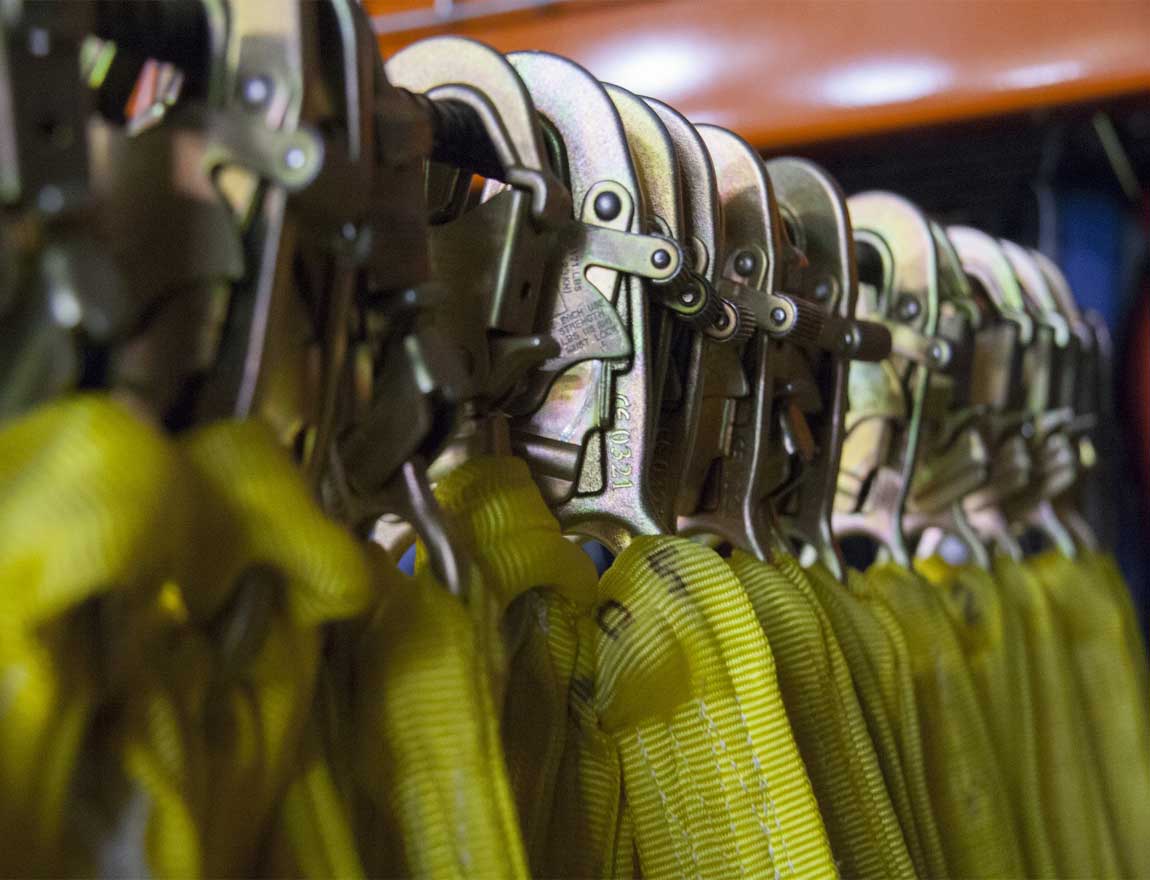
Fall Protection for General Industry
OSHA annually has a Stand Down for Falls in Construction.
OSHA annually has a Stand Down for Falls in Construction. If your company is not in construction, but in general industry, this is a good time to review fall protection issues at your own facility. Falls can occur anytime you have workers at heights regardless of the type of work they are doing.
⚡ TL;DR: In general industry, fall protection is required at 4+ feet or when working over hazardous equipment. You need proper anchor points, correctly calculated lanyards, rescue plans to prevent suspension trauma, and documented annual inspections of all fall equipment.
Here are some tips to remember for general industry:
In general industry, the rule for fall protection is that it’s needed when you’re at or above 4 ft. or when someone is working over hazardous machines or equipment.
When using scissor at 4 ft. or above, fall protection is needed. Even at lower heights, guardrails may be used, but still leave the potential for falling. It’s a best practice to wear fall protection when using these machines and these machines have secure anchor points already ready to go for use.
Use fall protection any time you’re using an aerial lift.
Know your calculations on distance to know how to choose the right length of lanyard to protect your workers in a fall. You need to account for the fall, deceleration distance, harness elongation, swing hazards, the length of the D-ring to the bottom of the feet and a safety factor distance above the ground.
Have a rescue plan to prevent suspension trauma and teach workers what they need to do to keep their blood circulating while suspended until help arrives. It only takes 5 minutes for them to become lightheaded, nauseous or unconscious.
Only use anchorage points that have been designed to be so and have been certified to meet or exceed OSHA regulations. Engineered anchor point systems typically exceed regulations and are a safe option. Do NOT use bad anchor points such as vents, stand pipes, railings, guardrails, air vents/ductwork, fixed ladders, skylights, light fixtures, electrical conduits, or air conditioning units.
Use of ladders create fall injuries. Know how to properly use a ladder, keep 3 points of contact at all times, check ladders for damage, and set them on a solid, stable base.
When was the last time you inspected your fall equipment? Make sure you are visually inspecting it before use and then conducting additional documented annual inspections. If ANYTHING looks odd, remove it from use.
Have your workers been trained in fall hazards? They must be trained prior to being exposed to that hazard, must understand the training and be retrained any time they exhibit inadequacies in knowledge or use of fall protection systems or equipment.
⚠️ What’s at stake: Falls are OSHA’s most-cited violation category. Serious fall violations run $10K–$16K each; Willful violations push past $165K. Beyond fines, a single fatal fall triggers OSHA criminal referral, civil litigation, and operational shutdown. Suspension trauma—loss of consciousness in 5 minutes—turns a rescue into a fatality unless your team knows what to do.
Need a complete fall protection audit, rescue plan, or training program? iSi can help.
Below are some fall protection-related resources you can draw upon:
Toolbox Topic Material from the National Safety Council OSHA’s Fall Protection Page: https://www.osha.gov/fall-protection Example Training Resources for Falls in General Industry Fall Protection Powerpoint and Tests in English and Spanish Fall Protection Powerpoint in English and Vietnamese This Week’s OSHA’s National Safety Stand Down to Prevent Falls in Construction Event Page Resources
💰 The cost of non-compliance: A single serious fall violation: ~$16,550. Five findings per inspection (common): $80K+. Post-incident Willful violations: $165K+. Litigation and settlements after a fatality exceed $1M+ routinely. Your insurance won’t cover willful violations.
Frequently Asked Questions
Q: At what height does OSHA require fall protection in general industry?
In general industry, OSHA requires fall protection when workers are at or above 4 feet or when working over hazardous machines or equipment that could cause injury if a fall occurs. This differs from construction, which has different height thresholds. Scissor lifts and aerial lifts require fall protection regardless of height.
Q: What information must be considered when selecting the correct lanyard length for fall protection?
Proper lanyard selection requires accounting for the fall distance, deceleration distance, harness elongation, swing hazards, the distance from the D-ring to the worker’s feet, and a safety factor above ground level. Incorrectly calculated lanyards may not provide adequate protection and create swing hazards during a fall.
Q: What should be included in a fall rescue plan?
A fall rescue plan must address prevention of suspension trauma, which can cause loss of consciousness in as little as 5 minutes if blood circulation is compromised. The plan should include procedures to keep suspended workers conscious and circulating blood, communication methods, and prompt rescue protocols aligned with OSHA standards and worker training.
Q: Which anchorage points are NOT acceptable for fall protection systems?
OSHA prohibits using vents, standpipes, railings, guardrails, air vents/ductwork, fixed ladders, skylights, light fixtures, electrical conduits, or air conditioning units as fall protection anchorage points. Only engineered and certified anchorage points meeting or exceeding OSHA standards should be used for fall protection attachment.
Fall protection isn’t about checklists—it’s about keeping people alive and your operation running. From written programs to inspections to training to rescue readiness, iSi builds comprehensive fall protection systems that work in your specific environment. Get started.
We Plug In. You Level Up.