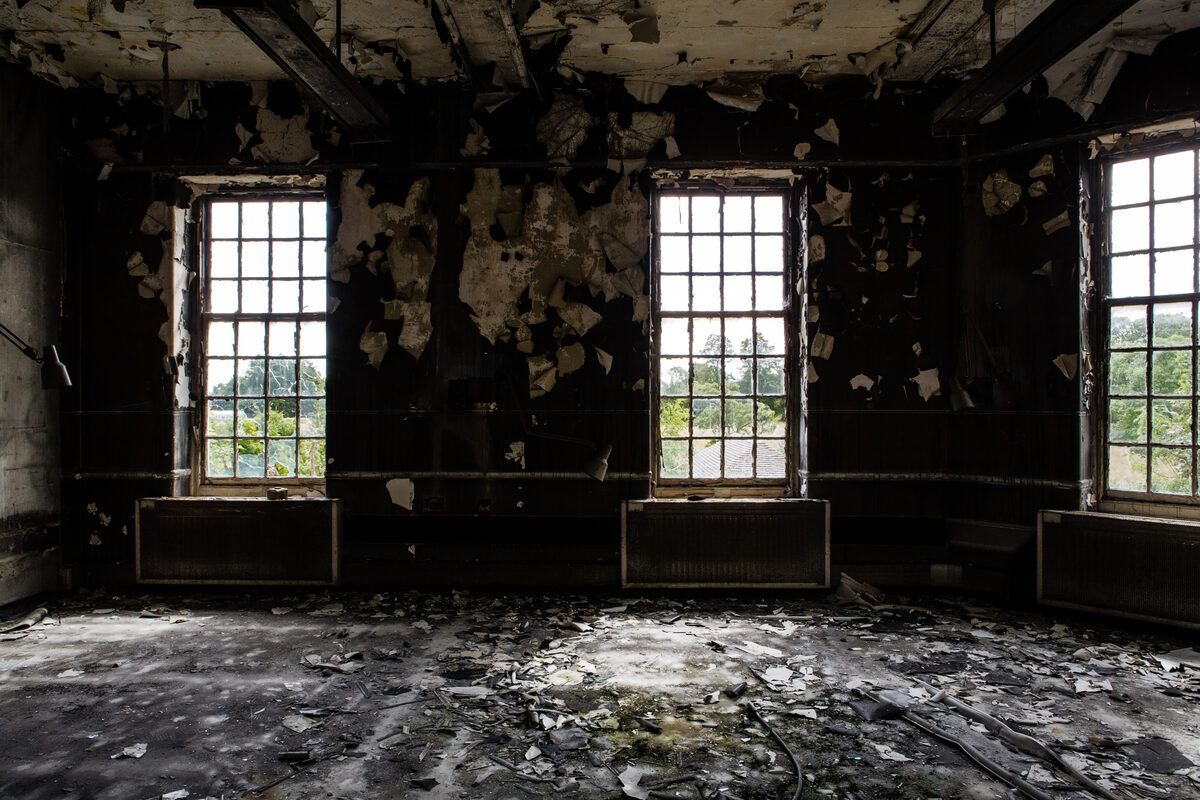
A Clean Phase I Does Not Clear a Former Dry Cleaner: What SBA Requires Before Your Lender Can Disburse
Where dry cleaning was done on site, SBA requires a Phase I followed by a Phase II no matter what the Phase I concluded. The rule and the state fund money.
The Phase I came back with no recognized environmental conditions. The buyer sent it to the lender expecting a clear to close, and the lender asked for a Phase II. On a property where dry cleaning was done on the premises, the lender is reading from a written rule. SBA’s loan program rules require a Phase II on that building whether or not the Phase I recommended one, and the requirement sits in the SOP with no discretion left to the loan officer. That is the single item that most often breaks a closing date on a former dry cleaner, and it is the one borrowers almost never budget for.
Three separate regimes land on the same building here. SBA’s environmental policy decides whether the loan funds. CERCLA and the all appropriate inquiries rule decide whether the buyer has any liability protection to assert afterward. TSCA decides how long a perchloroethylene machine can keep running at all. A borrower who reads one of the three gets surprised at underwriting by the other two.
Will a bank lend on a former dry cleaner property?
Yes. Under SBA SOP 50 10 8.1 with Technical Updates, effective October 1, 2026, any property with on-site dry cleaning, current or historical, requires a Phase I followed by a Phase II before the loan can be disbursed. The environmental review is not discretionary on that fact pattern. Conventional lenders set their own policy, and SBA’s rule is the citable floor that most small-business borrowers hit first.
That distinction matters when a broker tells a buyer “the bank will want a Phase I.” The SOP’s Environmental Policies and Procedures section binds 7(a) and 504 loans secured by a mortgage, deed of trust or leasehold deed of trust on commercial property. A conventional balance-sheet lender, a credit union or a private lender may accept a Phase I alone, a transaction screen, a third-party indemnity or environmental insurance instead. Agency multifamily lending runs on a different track again, which we worked through for a different asset class in the Phase I requirements lenders apply to office-to-residential conversions. Write the diligence budget to the lender you actually have, and if SBA financing is anywhere in the capital stack, write it to SBA.
Does SBA require a Phase II environmental site assessment on a former dry cleaner?
Yes. SOP 50 10 8.1 states that for any property with on-site dry cleaning facilities that used or likely used chlorinated or petroleum-based solvents, “a Phase I followed by a Phase II Environmental Assessment is required.” The Phase II is mandatory by policy and is not triggered by the Phase I’s conclusion. Any deviation requires an exception to policy from the SBA Environmental Committee.
This is where the borrower’s mental model fails. In ordinary practice the Phase I is the screen and the Phase II is the consequence of a finding. On a dry cleaner the order is fixed in advance. The Phase I still has to be done, to ASTM E1527-21 and by a qualified environmental professional, because SBA uses it to define the Phase II scope and because the buyer needs it for all appropriate inquiries. But the Phase II is already on the critical path the day the historical records show a machine on the premises.
Practical effect on sequencing: order both. A borrower who waits for the Phase I to come back before authorizing Phase II fieldwork adds the Phase II’s lab turnaround to the closing calendar for no reason. Scope the Phase II from the Phase I’s findings, yes. Do not wait for the Phase I to ask for it.
Which SBA SOP version governs environmental review right now?
SOP 50 10 8.1 with Technical Updates, effective October 1, 2026, issued by SBA Information Notice 5000-880695 and SBA Information Notice 5000-882227. It replaced SOP 50 10 8, effective June 1, 2025, which replaced 50 10 7.1, effective November 15, 2023. Any guidance citing SOP 50 10 7 or earlier is two full versions out of date.
This is worth checking on anything a broker, a lender’s checklist or a consultant’s proposal hands you. The environmental chapter has moved twice in under three years. A scope letter built from 50 10 7 will carry the right general idea and the wrong specifics, and the specifics are what the loan officer compares the report against. Ask the question directly: which SOP version is this scope written to?
Does the rule still apply if the dry cleaning stopped decades ago?
Yes. The SOP covers properties with on-site dry cleaning “whether currently in operation or operated historically at the site,” and Appendix 6 qualifies NAICS 8123, Laundry and Dry Cleaning Services, as an environmentally sensitive industry “if dry cleaning operations have ever existed on site.” There is no lookback cutoff in the policy, which is why the historical records review rather than the current tenant decides the scope.
A building operating as a nail salon today that ran a dry cleaning plant in 1983 matches. SBA requires the lender to make a good-faith effort to determine the NAICS codes for the property’s current and known prior uses and compare them against Appendix 6. A match sends the file to a Phase I regardless of loan amount, and the on-site dry cleaner language then sends it to a Phase II as well.
Chlorinated solvent plumes are the reason the policy reads this way. Perchloroethylene released under a slab in the 1970s does not weather off. It partitions into soil, dissolves into groundwater and volatilizes into the vapor phase under the building, and the vapor pathway is often the exposure route that survives long after the operator, the machine and the business license are gone.
What does an SBA Phase II on a dry cleaner site have to sample?
Three media, named explicitly: soil, groundwater, and soil vapor. SOP 50 10 8.1 states that the investigation “must address soil, groundwater, and soil vapor.” A Phase II that sampled soil and groundwater and skipped soil vapor does not satisfy SBA’s requirement for an on-site dry cleaner, regardless of what the work plan called it.
Soil vapor is the line item that gets dropped. It costs more and takes longer than the other two media, and it needs sub-slab points drilled inside an occupied building, which usually means a tenant-access conversation nobody wants to have. A Phase II scoped to ASTM E1903-19 (2020), the standard SBA names in its Appendix 4 definitions, does not automatically include soil vapor unless the scope says so, because E1903 is a framework and the media are a scoping decision inside it. On an SBA dry cleaner file that decision has already been made for you by policy.
Notice what the SOP does not do: it sets no numeric screening value and no attenuation factor. It names the media and leaves the evaluation to the environmental professional and the applicable state or EPA screening framework. Scope the work to the three media and argue the numbers afterward in the regulatory framework that applies to the site.
Who is qualified to perform the Phase II on a dry cleaner property?
SOP 50 10 8.1 requires an independent environmental professional who “holds a current Professional Engineer’s or Professional Geologist’s license and has the equivalent of 3 years of full time relevant experience.” This is stricter than the general environmental professional definition and it is specific to on-site dry cleaning facilities. Confirm the license and the experience in writing before the report is ordered.
Two things go wrong here. The first is a firm that meets the general environmental professional definition under the AAI rule, which allows several qualification routes that do not require a PE or PG license, and assumes that qualification carries into the dry cleaner Phase II. It does not. The second is independence. The SOP requires an independent professional, which rules out an in-house report from a party to the transaction.
This credential check costs one email and saves a rejected report. We have written before about what gets missed when a report is taken at face value, and a credential mismatch on a dry cleaner Phase II is the version of that failure that shows up at the loan committee rather than two years later.
How long is a Phase I or Phase II good for on an SBA loan?
Environmental Investigation Reports must be dated within one year of the date SBA issues the loan number, per SOP 50 10 8.1. That is a different clock from all appropriate inquiries. 40 CFR 312.20 requires the inquiry to be conducted within one year prior to acquisition, with five named components updated within 180 days prior to acquisition: interviews with past and present owners, operators and occupants, the environmental lien search, the government records review, the visual inspections of the property and adjoining properties, and the environmental professional’s declaration.
These two clocks are not the same clock and they do not run from the same event. One runs backward from the SBA loan number. The other runs backward from closing. A report can be current for SBA and stale for AAI at the same moment, and the consequence of the second failure is not a funding delay. It is the loss of the liability protection the buyer paid for the report to obtain.
That is also why a cheap “update” of an old report is usually the wrong purchase. A 2015 Phase I refreshed in 2026 solves neither clock. The five components named in 312.20 have to be conducted or updated inside the 180-day window, and a records refresh is not an update of the interviews or of the environmental professional’s declaration. The additional inquiries at 40 CFR 312.22 are a separate item the report has to address. EPA’s own all appropriate inquiries guidance is explicit about the components and the window.
Does the $250,000 SBA environmental threshold still exist?
Yes, and only where there is no NAICS match. Under SOP 50 10 8.1, with no match to Appendix 6, a loan up to and including $250,000 may begin with an Environmental Questionnaire, and above $250,000 the file requires a Questionnaire plus a Records Search with Risk Assessment. A NAICS match, including 8123, sends the file to a Phase I regardless of loan amount.
Worth stating plainly because the opposite rumor circulates: SBA did not tighten the loan-size test in this revision. The threshold survived into 50 10 8.1 intact. What it does not do is help a former dry cleaner. The dry cleaner provision is written as a standalone requirement, so neither the $250,000 branch nor the multi-unit building carve-out gets a property with on-site dry cleaning history out of a Phase I and a Phase II.
There is one more document borrowers forget on the SBA branch. Appendix 5 of the SOP requires an SBA Reliance Letter, and SBA requires it even when the report is already addressed to the lender. Order it with the report. Chasing it after the fact from a consultant whose invoice is already paid is slower than it sounds.
Is a dry cleaning drop station treated the same as a plant?
Not necessarily. SBA’s trigger is on-site dry cleaning facilities, and Appendix 6 qualifies NAICS 8123 “if dry cleaning operations have ever existed on site.” A counter that only accepted and returned garments, with no machine and no solvent kept on the premises, is a different fact pattern from a plant that ran a machine. The historical record has to establish which one the property was.
This is the one place in the analysis where a careful records review can legitimately reduce scope, and it is also the place where a thin records review costs the most. City directories, Sanborn fire insurance maps, historical aerials, building permits, state solvent registration records and interviews with prior occupants are what separate a drop station from a plant. A current tenant roster establishes nothing, and neither does a database report that simply lists a dry cleaning business at the address.
Do that records work before the conversation with the lender. Underwriting can accept a documented negative finding on a drop station. It has no way to act on an assertion in an email.
Can the lender be held liable for the cleanup?
Not if the lender stays inside the secured creditor exemption at 42 U.S.C. 9601(20)(A). EPA’s lender liability guidance confirms that a holder is not an owner or operator while it holds indicia of ownership primarily to protect a security interest and does not actually participate in the management of the facility. Making environmental compliance decisions or running day-to-day operations forfeits the exemption.
This is the quiet reason lenders are inflexible about the dry cleaner rule rather than willing to negotiate it. The exemption protects the holder of a security interest. It does not protect the holder of a defective loan file. SOP 50 10 8.1 states for 7(a) loans that failure to comply with the environmental provisions “may result in a denial of SBA’s guaranty,” and SBA routes contaminated-property submissions to Office of General Counsel attorneys at its environmental reviews mailbox, with exceptions and appeals going to an Environmental Committee of OGC attorneys who may consult an environmental engineer. The consequence of a waived Phase II lands on the lender’s guaranty, which is why a loan officer will not waive it as a courtesy to the borrower.
If the Phase II does find contamination and the deal is still alive, SBA publishes the disbursement factors to work: remediation complete with regulatory sign-off, de minimis contamination with remediation projected to finish within one year, an executed SBA Environmental Indemnification Agreement under Appendix 8 from a third-party indemnitor who is neither the applicant nor the operating company and who has the assets to honor it, contamination demonstrated to originate off site, or a documented exception request. Relying solely on the SOP’s “Other Factors” provision requires Environmental Committee clearance whether the lender is delegated or not.
Does Kansas, Missouri or Texas have a fund that pays for dry cleaner cleanup?
Three different answers, and the differences are large. Kansas runs an active Drycleaning Facility Release Trust Fund under the Drycleaner Environmental Response Act, covering contaminated existing and former facilities, with the fund not liable above $5,000,000 per site. Texas runs the Dry Cleaner Remediation Program at $5,000,000 per accepted application with a $5,000 applicant deductible. Missouri’s fund expired: RSMo 260.965 provides that “the provisions of sections 260.900 to 260.965 shall expire August 28, 2017.”
Read that Missouri line again if the property is in St. Louis or Kansas City, Missouri. Same federal rule, same plume, same SBA requirement, and no state fund to apply to. The site goes to Missouri DNR’s general cleanup and brownfields pathways instead. For Oklahoma, Nebraska and Colorado, agency program pages identify no dedicated dry cleaner fund, which is a negative finding from those pages rather than a statutory confirmation that none exists, and each state routes these sites to its voluntary cleanup program: ODEQ’s Voluntary Cleanup Program, NDEE’s VCP and CDPHE’s Voluntary Cleanup and Redevelopment Program.
The Kansas numbers reward a close reading. The Kansas fund reimburses corrective action performed by KDHE-approved others only up to $100,000 per site, and the annual budget for any one site is capped at no more than 10 percent of the fund’s annual income by priority ranking. So a $5,000,000 ceiling does not mean $5,000,000 this year. The fund is financed by a solvent fee of $5.50 per gallon at the factor 1.0 that applies to perchloroethylene and other chlorinated solvents, $0.55 per gallon at the 0.10 factor for non-chlorinated solvents, plus a 2.5 percent surcharge on gross receipts. Those are the current figures.
Kansas Senate Bill 184 of the 2025 to 2026 session would double that surcharge to 5.0 percent and raise the application deductible from $5,000 to $10,000, with penalties up to $10,000 per violation and each month of a continuing violation counted separately. The supplemental note estimates between $613,000 and $710,000 in additional annual fund revenue. SB 184 is not law. As of October 23, 2026 the last recorded action is the House Committee on Water reporting the bill favorably as amended on March 17, 2026, so underwrite to the current 2.5 percent surcharge and the current $5,000 deductible and watch the bill.
On the Texas side, the eligibility conditions do more work than the dollar figures. Property owners and previous property owners of current or former facilities may apply and may be co-applicants, with a $1,500 fee to seek fund benefits. The site has to be a participating site that did not opt out, the opt-out deadline having passed on February 28, 2006, and it cannot sit in the Voluntary Cleanup Program and the dry cleaner program at the same time. TCEQ’s registration and solvent fee page carries the current fees, including $20 per gallon on perchloroethylene.
The practical rule for a buyer: find out before closing whether a fund exists, whether this specific site is accepted into it, and what the deductible and the caps are. Every one of these ceilings is a ceiling on what the fund will pay, not a ceiling on what the site will cost. The gap belongs to the borrower.
What is the penalty for getting the environmental review wrong?
The civil penalty figures are the smaller risk. In effect for 2026 under 40 CFR 19.4: CERCLA section 109 at $71,545, Clean Air Act section 113(b) at $124,426 per day, and TSCA section 16(a)(1) at $49,772 per day. The larger exposure is uncapped CERCLA response-cost liability plus the loss of the bona fide prospective purchaser defense, which requires completed all appropriate inquiries under 40 CFR Part 312.
Those penalty amounts are the ones that took effect for violations assessed on or after January 8, 2025. They did not rise this year, because the 2026 inflation adjustment was cancelled, as we covered in the 2026 penalty schedule freeze. Anyone building a 2026 exposure figure from a “2026 penalty adjustment” headline is quoting an increase that never happened.
The real number is the remediation, and it is not a penalty at all. CERCLA response-cost liability is strict, joint and several, and uncapped. A buyer who closes on a stale report has completed no all appropriate inquiries and has no innocent landowner, contiguous property owner or bona fide prospective purchaser protection to assert when the state asks who is paying for the plume. That is the exposure that ends deals, and it is the one no fund ceiling limits.
The tenant on a statutory clock
If a perchloroethylene machine is still running at the property, its retirement date is already in federal regulation. EPA’s final PCE risk management rule under TSCA, 89 FR 103560, published December 18, 2024 and effective January 17, 2025, is codified at 40 CFR 751.605. Paragraph (b)(7) prohibits industrial or commercial use of PCE in dry cleaning machines acquired after June 16, 2025. Paragraph (b)(8) prohibits PCE use in third-generation machines after December 20, 2027. Paragraph (b)(9) prohibits all use, manufacture, processing and distribution of PCE for dry cleaning and spot cleaning after December 19, 2034. EPA counted 6,000 firms using PCE dry cleaning machines when it finalized the rule and projected 62 still using it at the end of the phaseout.
Two qualifications belong on that, and both are current.
First, the rule is under reconsideration. EPA opened a comment period in July 2025 as the first step in reconsidering the 2024 PCE rule under Executive Order 14219, comments closed August 29, 2025, and the agency’s PCE risk management page carries the reconsideration status. The phaseout dates in 751.605(b)(7) through (b)(9) are current law today. Treating 2034 as settled forever overstates it, and treating the phaseout as already repealed is simply wrong.
Second, several compliance dates in the same rule have already moved. EPA finalized extensions on July 28, 2026 at 91 FR 47145. Initial PCE exposure monitoring for non-federal owners and operators moved from December 15, 2025 to June 21, 2027. Meeting the existing chemical exposure limit, establishing a regulated area, the respiratory protection program and the workplace information and training program moved from March 13, 2026 to September 20, 2027. The exposure control plan moved from June 7, 2027 to December 20, 2027. That rule did not extend the dry cleaning phaseout dates in paragraphs (b)(7) through (b)(9).
For a lender and a buyer the consequence is the same either way. An operating PCE tenant is a tenant whose business model has a federal expiration date, the collateral has to underwrite to the cleanup rather than to the lease, and the occupancy assumption in the pro forma needs a line showing what happens when that tenant stops cleaning on site.
What to do on a file that is already under contract
- Run the NAICS determination on current and known prior uses before ordering anything, and document the good-faith effort. The answer decides whether the file starts at a questionnaire or at a Phase I, and getting it wrong is the most common way a closing timeline breaks.
- Order the Phase I to ASTM E1527-21, confirm it addresses the additional inquiries at 40 CFR 312.22, and order the SBA Reliance Letter under Appendix 5 with it.
- Authorize the Phase II at the same time, scoped to ASTM E1903-19 (2020) and to all three media: soil, groundwater and soil vapor.
- Get the Phase II professional’s PE or PG license number and experience confirmation in writing before fieldwork starts.
- Date the work to both clocks. Within one year of the SBA loan number for SBA, and within one year of acquisition with the five components inside 180 days for all appropriate inquiries.
- Determine the state fund answer for the specific site, including whether it has been accepted, what the deductible is and what the annual draw limit is.
- If a PCE machine is operating, confirm its generation and set the lease assumptions against 40 CFR 751.605(b)(8) and (b)(9).
iSi Environmental runs Phase I environmental site assessments to ASTM E1527-21 and carries them straight into Phase II investigation under the same engagement when the property calls for it, including sub-slab soil vapor work on former dry cleaning sites and the PE and PG credentialing SBA requires on that scope. If you have a building under contract with dry cleaning anywhere in its history, the useful first conversation is about the records review and the Phase II scope together, before the lender’s checklist sets the schedule for you.
Talk to iSi about a former dry cleaner Phase I and Phase II
Sources
- SBA, SOP 50 10 Lender and Development Company Loan Programs, version index and effective dates: https://legacy.sba.gov/document/sop-50-10-lender-development-company-loan-programs (verified 2026-10-23)
- SBA, SOP 50 10 8.1 Technical Policy Updates, effective October 1, 2026, full text: https://legacy.sba.gov/sites/default/files/2026-10/SOP%2050%2010%208.1%20Technical%20Policy%20Updates%20effective%20%2010.1.2026.docx (verified 2026-10-23)
- SBA Information Notice 5000-880695, Issuance of SOP 50 10 8.1: https://legacy.sba.gov/document/information-notice-5000-880695-issuance-sop-50-10-81 (verified 2026-10-23)
- SBA Information Notice 5000-882227, Issuance of Technical Updates to SOP 50 10 8.1: https://legacy.sba.gov/document/information-notice-5000-882227-issuance-technical-updates-sop-50-10-81 (verified 2026-10-23)
- 40 CFR 312.20, all appropriate inquiries, standards and practices and timing: https://www.ecfr.gov/current/title-40/chapter-I/subchapter-J/part-312/subpart-C/section-312.20 (verified 2026-10-23)
- 40 CFR 312.22, additional inquiries: https://www.ecfr.gov/current/title-40/chapter-I/subchapter-J/part-312/subpart-C/section-312.22 (verified 2026-10-23)
- 40 CFR Part 312, all appropriate inquiries rule: https://www.ecfr.gov/current/title-40/chapter-I/subchapter-J/part-312 (verified 2026-10-23)
- EPA, All Appropriate Inquiries: https://www.epa.gov/brownfields/all-appropriate-inquiries (verified 2026-10-23)
- 40 CFR 751.605, PCE prohibitions and compliance dates: https://www.ecfr.gov/current/title-40/chapter-I/subchapter-R/part-751/subpart-G/section-751.605 (verified 2026-10-23)
- 89 FR 103560, Perchloroethylene (PCE); Regulation Under TSCA, final rule, December 18, 2024: https://www.federalregister.gov/documents/2024/12/18/2024-30117/perchloroethylene-pce-regulation-under-the-toxic-substances-control-act (verified 2026-10-23)
- 89 FR 103560 official PDF, govinfo, firm counts: https://www.govinfo.gov/content/pkg/FR-2024-12-18/pdf/2024-30117.pdf (verified 2026-10-23)
- 91 FR 47145, PCE and CTC compliance date extensions, final rule, July 28, 2026: https://www.federalregister.gov/documents/2026/07/28/2026-15192/perchloroethylene-pce-and-carbon-tetrachloride-ctc-regulation-under-the-toxic-substances-control-act (verified 2026-10-23)
- EPA, Risk Management for Perchloroethylene (PCE), including reconsideration status: https://epa.gov/assessing-and-managing-chemicals-under-tsca/risk-management-perchloroethylene-pce (verified 2026-10-23)
- 40 CFR 19.4, civil monetary penalty inflation adjustment table: https://www.ecfr.gov/current/title-40/chapter-I/subchapter-A/part-19/section-19.4 (verified 2026-10-23)
- 42 U.S.C. 9601(20)(A), CERCLA secured creditor exemption: https://www.law.cornell.edu/uscode/text/42/9601 (verified 2026-10-23)
- EPA Office of Enforcement and Compliance Assurance, lender liability and the secured creditor exemption: https://www.epa.gov/sites/default/files/documents/lender-liab-07-fs.pdf (verified 2026-10-23)
- KDHE, Kansas Dry Cleaning Facility Release Trust Fund: https://www.kdhe.ks.gov/327/Kansas-Dry-Cleaning-Facility-Release-Tru (verified 2026-10-23)
- KDHE, Dryclean Response Unit: https://kdhe.ks.gov/258/Dryclean-Superfund-Unit (verified 2026-10-23)
- KDHE, Kansas Dry Cleaning Program: https://www.kdhe.ks.gov/285/Kansas-Dry-Cleaning-Program (verified 2026-10-23)
- Kansas Legislature, SB 184 status and action history: https://kslegislature.gov/li/b2025_26/measures/sb184/ (verified 2026-10-23)
- Kansas Legislature, SB 184 supplemental note: https://kslegislature.gov/li/b2025_26/measures/documents/supp_note_sb184_02_0000.pdf (verified 2026-10-23)
- TCEQ, Dry Cleaner Registration and Solvent Fees: https://www.tceq.texas.gov/permitting/registration/dry_cleaners/registration_fees.html (verified 2026-10-23)
- TCEQ, Dry Cleaner Remediation Program guide: https://www.tceq.texas.gov/downloads/remediation/dry-cleaners/forms/guide_doc.pdf (verified 2026-10-23)
- Missouri Revisor of Statutes, RSMo 260.965, expiration: https://revisor.mo.gov/main/OneSection.aspx?section=260.965 (verified 2026-10-23)
- Oklahoma DEQ, Voluntary Cleanup Program: https://oklahoma.gov/deq/divisions/land-protection/cleanup-redevelopment/voluntary-cleanup-program.html (verified 2026-10-23)
- NDEE, Nebraska Voluntary Cleanup Program guidance: https://dwee.nebraska.gov/sites/default/files/publications/VCP%20Guidance%20Document%20Complete%20Oct%202021_0.pdf (verified 2026-10-23)
- CDPHE, Voluntary Cleanup and Redevelopment Program: https://cdphe.colorado.gov/hm/voluntary-cleanup (verified 2026-10-23)