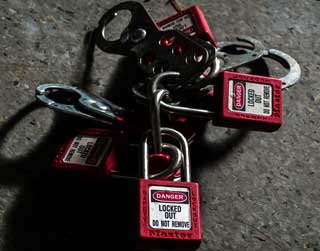
LOTO Standard Also on OSHA's Update List
OSHA is now looking to potentially update its lockout-tagout (LOTO) standard, with a focus on control circuit devices and the advancement of robotics.
OSHA is now looking to potentially update its lockout-tagout (LOTO) standard, with a focus on control circuit devices and the advancement of robotics. The current LOTO standard was published in 1989.
⚡ TL;DR: OSHA is revising the 1989 LOTO standard to account for modern technology—control circuit devices and collaborative robots. The revision centers on whether newer energy-isolating devices can be used for short maintenance tasks. Comments due August 18, 2019. If you use control circuit devices or collaborative robotics, your input shapes the final rule.
The Current LOTO Standard
The focus of OSHA’s efforts with LOTO centers on control circuit devices. The LOTO standard requires energy-isolating devices to be used to control energy during servicing and maintenance of machines and equipment. In the current standard, control circuit devices cannot be used for this purpose. However, OSHA says it “recognizes recent technological advances may have improved the safety of control circuit-type devices.”
⚠️ Why this matters: LOTO violations are consistently in OSHA’s top 10. If your facility uses older equipment with mechanical isolation, you’re compliant under the 1989 standard. But as robotics and advanced manufacturing become standard, your current LOTO procedures may not cover new hazards. The revised standard will likely require updated procedures, training, and possibly new equipment—so facilities need time to plan.
OSHA’s Technical Review
Since 2016, OSHA has granted variances in compliance to several companies who have been able to prove that the control circuit devices they were using could be a safe alternative. During an evaluation of a recent variance request, OSHA decided that the time had come and the potential technology was available to consider if there was a basis to allow these devices in certain circumstances. Also, their own research has shown that these devices aren’t typically used in short servicing tasks of a machine and don’t require an extensive disassembly of the machine or entrance into it. As a result, OSHA wants feedback from the public and industry about this.
Does your facility use control circuit devices or modern robotics? Now is the time to comment on the proposed LOTO revisions and shape the rule that will govern your operations.
OSHA is requesting information on:
- How employers have been using control circuit devices
- Information about the types of circuitry and safety procedures being used;
- Limitations of their use, to determine under what other conditions control circuit-type devices could be used safely;
- Use and limitations of using industry consensus standards for LOTO such as ANSI/ASSPP Z244.1;
- How the evolution of robotics technology such as collaborative robotics, robotics that move freely, or robotic devices that can be worn by workers has affected risks of worker exposure to hazardous energy;
- The anticipated economic benefits, impacts, and other offsets that would occur if the standards were updated, such as benefits to productivity or reduction of injuries vs. costs of new equipment, servicing, or need for new training.
LOTO and electrical-related issues are found to be among OSHA’s Top 10 violations each year. The agency is accepting comments electronically until August 18, 2019 at regulations.gov and from there, OSHA will be making a determination of what actions, if any, needs to be taken. More information can be found here.
Frequently Asked Questions
Q: What is lockout-tagout (LOTO) and why is it a critical safety requirement?
Lockout-tagout (LOTO) is the OSHA process of safely isolating energy sources (electrical, mechanical, pneumatic, hydraulic) during maintenance and servicing of machines and equipment. LOTO prevents unexpected machine startup that could cause severe injuries or fatalities, and is required by 29 CFR 1910 Subpart J whenever workers service or maintain equipment with hazardous energy sources.
Q: What is a control circuit device and why is OSHA reconsidering its use?
A control circuit device is an energy-isolating device that controls power through electrical circuits rather than through mechanical isolation. OSHA’s 1989 LOTO standard prohibited control circuit devices, but recent technological advances in their design have prompted OSHA to reconsider whether these devices could be safely used in certain machine servicing scenarios, particularly for short maintenance tasks.
Q: How has robotics technology affected LOTO compliance requirements?
The evolution of collaborative robots (cobots), mobile robots, and wearable robotic devices has created new hazardous energy scenarios that the 1989 LOTO standard may not fully address. OSHA is seeking industry input on how these technological advances affect worker exposure to hazardous energy and whether updated LOTO standards are needed for modern robotics applications.
Q: Why are LOTO violations so common in OSHA enforcement?
LOTO and electrical safety violations consistently rank among OSHA’s top 10 most cited violations because many facilities inadequately implement LOTO procedures, fail to maintain proper energy isolation during maintenance, or lack comprehensive LOTO training. iSi Environmental helps facilities develop and implement compliant LOTO programs to prevent these frequent violations.
💰 Cost of LOTO violations: Serious OSHA citations for inadequate LOTO procedures: $12K–$40K each. A worker amputation from improper LOTO: $500K–$2M+ in workers’ comp, liability, and fines. A proactive LOTO audit and training program costs $3K–$8K—insurance against catastrophic risk.
We Plug In. You Level Up. Audit your LOTO program →