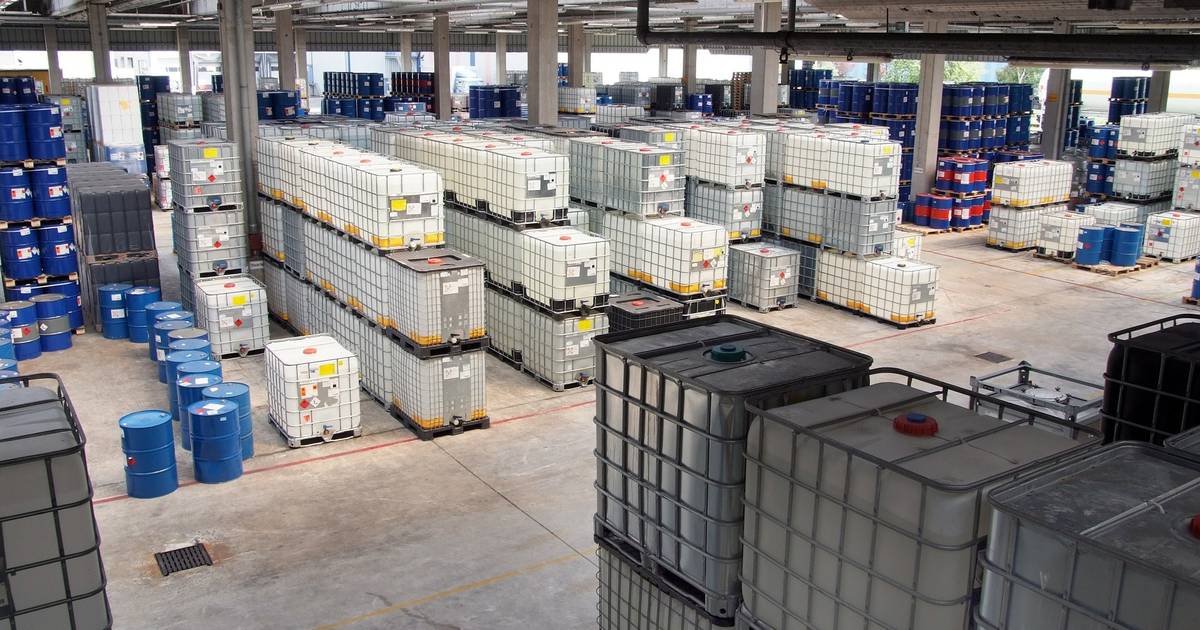
Multi-Framework Chemical Inventory Compliance for Municipal Operations
Municipalities managing chemicals across departments face EPCRA Tier II, OSHA HazCom, RCRA, and DOT requirements simultaneously. Map the overlapping frameworks and avoid $1M+ penalties.
The Scenario Most Safety Coordinators Don’t See Coming
You’re the safety coordinator for a mid-sized city or county. Your responsibilities span the wastewater treatment plant, the parks and grounds maintenance yard, the fleet maintenance shop, the fire department training facility, the water distribution network, and a handful of field offices. Across these locations, your colleagues store sodium hypochlorite, hydrochloric acid, fuel, pesticides, solvents, paint thinners, and propane.
One oversight: a single missed deadline, one unlabeled container, or one untrained driver transporting chemicals between sites.
That oversight doesn’t trigger one penalty. It triggers penalties under four independent federal regulatory frameworks simultaneously, plus state-specific right-to-know laws, all accruing daily until corrected.
This post maps the multi-framework landscape municipal facilities face and shows why the traditional “hire a consultant once every three years” approach leaves massive compliance gaps.
Why Municipal Operations Are Different
Traditional manufacturing facilities know their chemical inventory. A plant manager can walk to the warehouse and inventory a known set of products.
Municipal operations are distributed. Chemicals live in:
- Water treatment plants (sodium hypochlorite, acids for pH adjustment, polymers)
- Fleet yards (fuel, oil, hydraulic fluid, solvents)
- Parks and grounds (pesticides, herbicides, fertilizers)
- Maintenance shops (paint thinners, degreasers, lubricants)
- Fire department training facilities (flammable liquids for drills)
- Wastewater treatment (screening compounds, sludge treatment chemicals)
Each location may have a different department manager. Inventory tracking often lives in separate spreadsheets or isn’t tracked at all. Turnover is high. When someone leaves, institutional knowledge walks out the door.
This fragmentation creates compliance blind spots. And under EPCRA, OSHA HazCom, RCRA, and DOT regulations, those blind spots are not cost-free.
Framework 1: EPCRA Tier II Reporting — The Annual Deadline You Can’t Miss
What Tier II Is
EPCRA Section 312 requires facilities storing hazardous chemicals above certain thresholds to report to state and local authorities. It’s designed to give emergency responders and community members visibility into what chemicals are stored nearby.
For municipalities, it’s a straightforward reporting obligation. For most people in municipal government, it’s invisible until it’s a problem.
The Thresholds That Matter
- General chemicals: 10,000 pounds
- Extremely Hazardous Substances (EHS) like ammonia, chlorine, hydrochloric acid: 500 pounds or the substance’s Threshold Planning Quantity (TPQ), whichever is lower
A water treatment plant storing 5,000 pounds of sodium hypochlorite triggers reporting. A fleet yard with 12,000 gallons of diesel fuel triggers reporting. Parks departments with centralized pesticide storage often exceed thresholds without realizing it.
The Reporting Process
- Who reports? The facility owner or operator
- What form? Your state’s Tier II form (sometimes called Form R). Each state manages its own submission system.
- When? By March 1 each year for chemicals stored during the preceding calendar year
- To whom? Your State Emergency Response Commission (SERC), your Local Emergency Planning Committee (LEPC), and the fire department with jurisdiction
The critical point: March 1 is a hard deadline. One day late = one day of non-compliance. Thirty days late = 30 days of non-compliance at $66,000 per day (the 2026 federal penalty rate under 40 CFR 19.4).
What Happens When You Miss the Deadline
The Environmental Protection Agency (or a state environmental agency acting as delegated implementer) can assess a civil penalty. The calculation is straightforward: number of violations × penalty per day × days of non-compliance.
A facility with 10 reportable chemical categories, all not reported by March 1, and filed 30 days late, faces:
10 violations × $66,000/day × 30 days = $19.8 million
This is not theoretical. In 2023, a municipal water authority in the Midwest settled EPCRA Tier II violations across four treatment plants for $125,000. The settlement included attorney fees, corrective action, and a commitment to third-party compliance audits going forward. The penalty itself was substantial, but the full cost—legal, administrative, reputational—was higher.
The Consolidation Problem
Many municipalities think they’re complying because one person files something by March 1. But if the filing is incomplete—missing departments, missing chemical categories—it’s still a violation. The person filing may not know what the water plant stores. The water plant manager may not know what the fleet yard stores. No one person has the complete picture.
Practical fix: One consolidated inventory spreadsheet or database where every municipal department enters its chemicals and quantities by December 15. One person owns the Tier II form. One submission. No surprises.
Framework 2: OSHA Hazard Communication — The 2024 Update You Need to Know About
What HazCom Is (And Why It Matters Now)
OSHA’s Hazard Communication standard (29 CFR 1910.1200) requires employers to ensure workers know the hazards of chemicals they handle. Labels, Safety Data Sheets (SDSs), and training are the three pillars.
In May 2024, OSHA issued a major update aligning HazCom to the United Nations GHS Revision 7 (Globally Harmonized System). New pictograms, new hazard statement wording, new precautionary statements.
Coverage Complication: Is Your Municipality Covered?
This is where it gets tricky. Federal OSHA does not cover state and local government employers (the law explicitly exempts them). However, 25 states have their own OSHA plans and enforce HazCom on state and local employers.
States with explicit public-sector HazCom coverage include California, Connecticut, Illinois, New York, Puerto Rico, and the Virgin Islands. Some states (Kentucky, Oklahoma, Nebraska) have partial public-sector coverage.
If you’re in a federal OSHA state, your municipal employer might not technically be OSHA-regulated. But if you’re in a state-plan state, HazCom applies to your workplace the same way it applies to private employers.
How to check: Contact your state’s OSHA plan administrator (usually the state Department of Labor or Environmental Quality). Ask: “Does this OSHA plan cover municipal employers?”
The 2024 Compliance Timeline
- Manufacturers and importers: Must update labels and SDSs to GHS Rev 7 by July 19, 2026
- Employers (including municipalities): Must have GHS Rev 7-compliant labels and SDSs in the workplace by January 19, 2027
For municipal facilities, this means:
- By January 19, 2027, all chemical containers must have labels with updated GHS pictograms and hazard statements
- All SDSs in the workplace must be current (dated 2024 or later, after January 2027)
- All employees who handle these chemicals must receive training on the new pictograms and hazard classifications
Penalties for Non-Compliance
OSHA penalties range from $6,000 (other-than-serious violation) to $10,000+ (serious violation). Each violation is counted separately:
- Missing or outdated SDS: one violation
- Incorrectly labeled container: one violation per container
- Untrained employee: one violation
A municipal water treatment plant with 15 chemicals, outdated labels, missing SDSs, and untrained staff faces penalties in the $100,000–$300,000 range if inspected.
Practical Steps for 2026–2027
- Audit all chemical containers in municipal facilities by Q3 2026
- Request updated SDSs from all chemical suppliers (manufacturers are required to provide them)
- Update all labels to the new GHS Rev 7 pictogram format by December 2026
- Schedule employee training on new hazard classifications before January 2027
For municipalities, this is a coordination challenge. Water plants, fleet yards, and maintenance shops all need simultaneous label updates and training. One facility missing the deadline = one violation per chemical.
Framework 3: RCRA Generator Status — The Misclassification You Didn’t Know You Had
The Household Waste Exemption (And Why It Doesn’t Apply to You)
RCRA is the federal hazardous waste law. It regulates the generation, transport, treatment, storage, and disposal of hazardous waste.
One of RCRA’s most misunderstood provisions is the “household hazardous waste exemption” (40 CFR 261.4(b)(1)). Many people think this applies to all municipalities. It doesn’t.
The exemption applies to: Waste generated in households (residences) by residents. Think: leftover paint from a homeowner’s basement, cleaning products from under the sink, pesticides from a garage.
The exemption does NOT apply to: Waste generated at municipal facilities (water plants, fleet yards, maintenance shops, parks departments). Even though the facility is public, the waste is not household-generated.
Generator Classification: Size Matters
RCRA classifies hazardous waste generators by how much they generate per month:
| Classification | Monthly Generation | On-Site Storage Limit | Permit Required |
|---|---|---|---|
| CESQG (Conditionally Exempt SQG) | < 100 kg (~220 lb) | No limit | No permit |
| SQG (Small Quantity Generator) | 100–1,000 kg | 6,000 kg (6 months of generation) | Reduced/notification only |
| LQG (Large Quantity Generator) | > 1,000 kg | 90 days | Full hazardous waste permit |
Example 1: A water district maintenance shop generates 150 kg/month of spent mineral spirits (a hazardous waste). Status: SQG. Requirement: generator ID, manifests, reduced-burden but still mandatory recordkeeping.
Example 2: A municipal fleet yard with 8 vehicles generates used oil, filters, hydraulic fluid, and antifreeze. Combined, it’s 2,000 kg/month. Status: LQG. Requirement: EPA generator ID, full manifests, 90-day on-site storage limit (must remove hazardous waste off-site within 90 days), detailed recordkeeping, and a hazardous waste permit.
Common Municipal Misclassifications
- Fuel storage: A fleet yard with 12,000 gallons of diesel fuel is not a hazardous waste generator (fuel is not inherently hazardous in this context). But spent oil from machinery is hazardous waste. Municipalities sometimes assume fuel and oil storage together; they’re tracked separately.
- Pesticide containers: Empty pesticide containers are hazardous waste after use. A parks department accumulating 50 empty pesticide containers per season may be an LQG without knowing it.
- Wastewater sludge: Sludge from water treatment plants may be hazardous waste (depends on testing). If hazardous, the plant is at minimum an SQG.
Penalties for Generator Violations
- Civil penalty for failure to obtain permit: $66,000/day
- Criminal penalties for knowing violations: $50,000/day and up to 5 years imprisonment
The EPA and state environmental agencies periodically audit municipal operations. When they find an LQG operating without a permit, the penalty accrues daily from the first day the facility generated > 1,000 kg/month (often years before the audit). A 3-year violation = $66K × 1,095 days = $72.27 million in theoretical liability.
Settlements are negotiated, but six-figure cleanup costs, permitting costs, and penalties are common.
Practical Step: Generator Classification Audit
- Identify all waste streams: Used oil, spent solvents, pesticide containers, sludge, batteries, fluorescent tubes, paint waste, etc.
- Weigh or estimate generation rates per month for each stream
- Classify each stream as hazardous (consult SDSs or send samples for testing)
- Sum monthly generation: If > 1,000 kg/month, you’re an LQG and need a hazardous waste permit
- If LQG, apply for permit immediately (processing takes 4–8 weeks)
Framework 4: DOT Hazmat Transport — The Compliance Gap That Kills
When Does DOT Apply?
DOT hazmat regulations (49 CFR 172–173) apply to anyone transporting hazardous materials in commerce. For municipalities, “commerce” includes:
- Transporting fuel between fleet yards
- Moving pesticides from central storage to field application sites
- Transporting used oil or solvents off-site for disposal
- Moving acids or bases between water treatment facilities
The trigger: The material is hazardous, and it crosses from one property to another (or within a facility if it’s in a vehicle).
Hazmat Training & Licensing
- Hazmat endorsement on CDL: Required if a driver transports certain quantities of hazardous materials in a commercial motor vehicle (applies to municipal fleet staff)
- Hazmat training: Every shipper, receiver, and transporter employee must receive training every 3 years
- Documentation: Shipping papers, placards, emergency response guides must accompany shipments
Common Municipal Gaps
- Untrained drivers: A municipal employee moves pesticides or fuel without hazmat training
- Missing placards: A vehicle transporting hazmat is not placarded (orange diamond warnings)
- No shipping papers: No documentation of what’s being transported or emergency response instructions
- Improper packaging: Hazmat is packed in containers not DOT-certified for that material
Penalty Exposure
Federal DOT penalties for hazmat violations can reach $75,500 per violation. An untrained driver transporting hazmat without placards and shipping papers faces multiple violations:
- No hazmat endorsement: $5,000–$10,000
- Missing placards: $5,000–$10,000
- Missing shipping papers: $5,000–$10,000
- No driver training: $5,000–$10,000
Total exposure for one incident: $20,000–$40,000 minimum. And if an accident occurs, liability skyrockets.
Practical Step: Hazmat Transport Audit
- Identify all inter-facility chemical moves (fuel, pesticides, used oil, acids, solvents, propane)
- Determine placardable quantities (based on 49 CFR 173 commodity-specific thresholds)
- For any placardable move, ensure:
- Driver holds CDL with hazmat endorsement
- Vehicle is placarded (orange diamond with commodity class)
- Shipping papers are aboard and accessible
- Driver has current hazmat training (within past 3 years)
- Document driver training completion and retain records for 3 years
State Right-to-Know Laws: The Layer On Top
Every state implements EPCRA Tier II through its own agency and database. Each state’s system differs slightly:
Kansas: KDHE manages EPCRA reporting. Tier II forms are submitted electronically through the KDHE portal. Penalties for late filing are enforced by KDHE.
Missouri: The Missouri Department of Public Safety administers SARA Title III (Missouri’s EPCRA implementation). Tier II forms submit to the state’s Tier II coordinator. State penalties can exceed federal penalties if the state chooses.
Oklahoma: The Oklahoma Department of Environmental Quality coordinates with EPCs. Tier II data is public and accessible through the DEQ EPCRA portal. Enforcement follows federal guidelines but can include state-level penalties.
Texas: The Texas Commission on Environmental Quality (TCEQ) administers Tier II. The TCEQ Tier II Manager system is the submission portal. Penalties can be higher than federal baseline if repeat violations occur.
Multi-State Complexity
If your municipality operates across state lines (county water district spanning Kansas and Missouri, for example), you must file Tier II reports with both state systems. Missing one deadline while meeting the other still results in penalties for the missing state.
The Real Cost: A Single Missed Deadline vs. Prevention
Scenario: One Missed Tier II Deadline
A city water department with 8 municipal facilities stores chemicals including sodium hypochlorite, acids, polymers, and fuel. The safety coordinator, who has been tracking Tier II reporting for 5 years, retires in January. The new coordinator doesn’t know about the March 1 deadline. Tier II is filed on April 15—45 days late.
Penalty exposure:
- 8 facilities × 5 chemical categories = 40 reportable items
- 40 violations × $66,000/day × 45 days = $118.8 million
Settlements typically end up in the $100K–$300K range after negotiation, but the point stands: one missed deadline creates six-figure risk.
Scenario: Prevention via Compliance Audit
The same city conducts a third-party municipal compliance audit with iSi Environmental:
- Cost: $12,000 (typically 4 days of work across multiple facilities, inventory consolidation, Tier II preparation, HazCom review)
- Output: Consolidated chemical inventory, pre-completed Tier II form, calendar reminder system, staff training on generators
- Benefit: Prevents $118.8M in theoretical penalty exposure; eliminates 99.9% of compliance risk for the year
ROI: $118.8M ÷ $12,000 = 9,900x cost avoidance per year
Even if you never get audited, the insurance value of knowing you’re compliant is high. And if you do get audited, the audit documents show good-faith compliance effort, which regulators take into account when settling violations.
The Integrated Solution: From Four Frameworks to One System
Municipal compliance doesn’t have to be a scattered effort across four independent regulations. An integrated approach consolidates it:
- Single inventory database: Every municipal facility enters chemicals monthly. Auto-calculates EPCRA thresholds, RCRA generation rates, and OSHA HazCom obligations.
- Tier II automation: System pre-fills the state Tier II form by March 1 and prompts submission.
- RCRA classification alerts: System flags when a facility crosses CESQG, SQG, or LQG thresholds and triggers permit applications.
- HazCom compliance dashboard: Shows which SDSs are out of date, which labels need updating, and which staff need training (by GHS Rev 7 deadline).
- DOT hazmat tracking: Logs inter-facility chemical moves, flags required training and placarding, documents driver qualifications.
What iSi Environmental Brings to Municipal Compliance
EPCRA Tier II Preparation & Filing
- Multi-facility inventory consolidation
- State-specific Tier II form preparation
- Electronic submission to your state’s SERC/LEPC
- Reminder system for March 1 deadline
- Multi-year filing support
RCRA Generator Classification & Permitting
- Waste stream analysis (distinguish municipal operations from household waste exemption)
- Generator classification (CESQG, SQG, or LQG)
- Hazardous waste permit application and support
- Manifest tracking and recordkeeping system
- Compliance audits and corrective action plans
HazCom 2024 Transition Support
- SDS acquisition and distribution for all chemicals
- Label audit and compliance (GHS Rev 7 pictograms)
- Employee training on new hazard classifications
- Documentation and recordkeeping systems
- Timeline management through January 2027 deadline
Municipal Hazmat Transport Compliance
- DOT hazmat inventory and threshold analysis
- Driver qualification and training tracking
- Placard, shipping papers, and documentation system
- Incident response planning
Where to Start
If you’re a municipal safety coordinator or public works manager responsible for chemical inventory:
-
Request a free 30-minute compliance assessment: We’ll identify your primary gaps (Tier II, RCRA, HazCom, DOT) and show you the regulatory frameworks affecting your operations.
-
Get a 90-day action plan: We’ll prioritize by deadline and risk. March 1 Tier II deadline comes first. HazCom transition comes next. RCRA permits take 4–8 weeks, so they need early planning. DOT training can happen in parallel.
-
Implement a consolidation system: One database, one annual process, one March 1 filing. Compliance becomes routine, not crisis management.
The alternative—ignoring these frameworks until an inspection or complaint triggers enforcement—is far more expensive. A single missed deadline costs $100K+. A proactive audit costs $12K and prevents it.
The math is clear. The question is whether your municipality is ready to move from reactive to proactive compliance.
About iSi Environmental
iSi Environmental is a Midwest-based regulatory compliance firm specializing in environmental, health, and safety operations for municipalities, water districts, public works departments, and other government entities. We work with safety coordinators, facility managers, and government administrators to navigate complex federal and state regulations without the overhead of full-time EHS staff.
Our municipal compliance audit model cuts through the multi-framework complexity and gives you a consolidated action plan. Start with one facility. Expand to your entire operation. Compliance becomes systematic, not sporadic.
Ready to eliminate municipal chemical inventory compliance risk? Contact us to schedule your assessment.