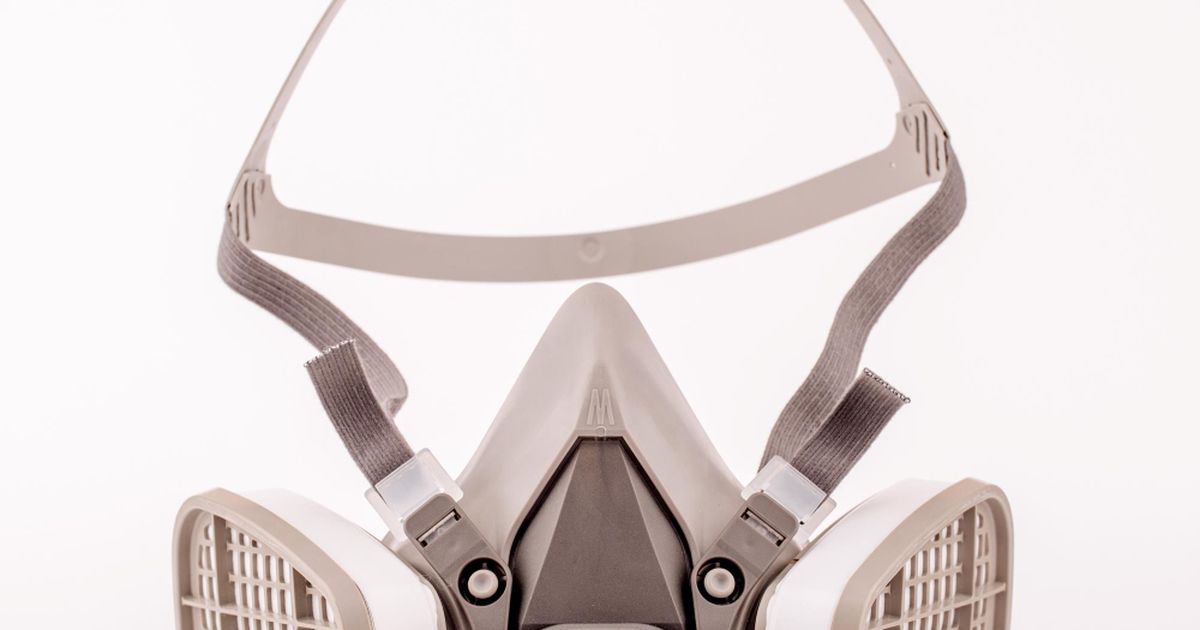
Defending Your Respirator Cartridge Change Schedule: When Manufacturer Recommendations and NIOSH Data Fall Short
OSHA 1910.134 requires defensible cartridge change-out schedules backed by objective data. The 5-step methodology when NIOSH loading data isn't available.
The most common change-out schedule defense fails the moment an OSHA inspector opens your written respiratory protection program and asks: “Where did these numbers come from?”
Most safety managers answer with the phrase that sounds defensible but isn’t: “We follow the manufacturer’s recommendation.” By itself, that answer exposes you to a citation under 29 CFR 1910.134(d)(3)(iii)(B) — and possibly a citation for the written program defect under 1910.134(c)(1).
The standard gives you exactly two legally compliant options for controlling cartridge service life: install a NIOSH-certified end-of-service-life indicator (ESLI) for the specific contaminant, or build a written change-out schedule backed by “objective information or data that ensures cartridges are changed before the end of their service life.” That second path is where the vulnerability lives. This brief walks through the enforcement logic behind it, how to win that defense when a manufacturer’s table doesn’t cover your actual conditions, and what happens when your chemical has no NIOSH isotherm data at all.
The “Manufacturer Recommendation” Defense — And Why It Fails
OSHA Directive CPL 02-00-158, the inspection guidance issued June 26, 2014, explicitly addresses this scenario. The directive tells Compliance Safety and Health Officers (CSHOs) to ask this interrogation sequence when a change schedule is cited:
- Ask to see the written respiratory protection program.
- Ask to see the documented basis for the change-out interval (the schedule itself and the data supporting it).
- If the employer says “we follow the manufacturer’s recommendation,” ask the CSHO to verify:
- Does the recommendation cover the actual chemical being used, or a generic contaminant class?
- Does the recommendation match actual workplace conditions: temperature, humidity, work rate, breathing rate, and duration?
- Is the recommendation reduced for conditions that differ from the manufacturer’s assumptions (which typically assume 50% RH and a single contaminant)?
If the employer has produced no written basis — no table, no calculation, no test data — the employer is exposed to a (d)(3)(iii)(B) citation. If the employer has produced a table that doesn’t match workplace conditions, that’s still a citation, because the standard requires the program to “describe the data relied upon and the basis for relying on it.”
The penalty exposure is significant. 29 CFR 1910.134 was the 4th most-cited OSHA standard in FY2024 with 2,470 citations. A single (d)(3)(iii)(B) serious violation costs $16,550 per violation. Because the violation is counted per employee exposed, a single non-compliant cartridge schedule across 10 workers means 10 separate violations — $165,500 in penalties before considering a willful or repeat designation.
What CPL 02-00-158 Actually Requires
The OSHA inspection directive does not demand experimental testing for every cartridge. It demands documentation. Here’s what the written respiratory protection program must contain:
1. Exposure Assessment
A measured or calculated airborne concentration for each chemical the cartridge protects against. The assessment must reflect actual workplace conditions: temperature, humidity, work rate, and duration. Not an assumed concentration — the actual chemical exposure in your facility.
If you don’t have measured data, you must estimate it using either:
- Historical monitoring from your own site
- Industry-typical exposure estimates for the process (e.g., spray application, dip tank operation)
- Calculation based on chemical usage rate and ventilation
The program must state which method was used and why.
2. Cartridge Applicability Check
Verify the cartridge is NIOSH-certified for the specific chemical class — organic vapor (OV), acid gas, ammonia/methylamine, formaldehyde, or multi-gas. Verify it meets the assigned protection factor (APF) for the calculated maximum use concentration.
A cartridge rated for OV but used against formaldehyde is non-compliant, even if the schedule looks reasonable. The documentation must show that step of verification.
3. Service-Life Determination Basis
The program must describe how the change-out interval was determined. CPL 02-00-158 recognizes three approaches as valid:
A. Manufacturer Recommendation
Acceptable if:
- The recommendation covers the actual chemical (not a generic “organic vapors”)
- The workplace conditions match the manufacturer’s assumptions, OR the manufacturer’s data is reduced for conditions that differ (humidity adjustment, work rate adjustment)
- The recommendation is documented in the program
Example: A manufacturer’s table says “OV cartridge, 8-hour service life at 25°C, 50% RH, light work.” If your facility operates at 80% RH, the service life must be cut per OSHA’s humidity adjustment factor — typically by half or more above 65% RH.
B. Mathematical Model — NIOSH MultiVapor
NIOSH MultiVapor (built on Yoon-Nelson breakthrough kinetics) is OSHA’s preferred default. The program must document:
- The input parameters (chemical, concentration, temperature, humidity, breathing rate, cartridge bed geometry)
- The output service life
- Any conservatism factors applied
MultiVapor accuracy is ±5% against experimental data for chemicals with preprogrammed isotherms. This level of precision is acceptable under CPL 02-00-158.
C. Experimental Breakthrough Testing
Required when:
- The chemical has no NIOSH isotherm data
- A multi-component mixture significantly differs from MultiVapor’s preprogrammed values
- The chemical has a boiling point below 65°C (149°F) — these cannot be reliably modeled and must be tested
4. Conservatism Factors
Apply documented safety factors:
- Humidity reduction: Service life is cut by ÷2 above 65% RH (OSHA eTool standard)
- Breathing rate uplift: Heavy exertion increases breathing rate beyond the standard 25 L/min assumption
- Mixture rule: If multiple chemicals are present, assign the service life to the least-well-adsorbed compound at total mixture concentration in ppm
- End-of-life threshold: Typically 10% breakthrough (the point at which 10% of the inlet concentration penetrates the cartridge) or the OSHA PEL/action level, whichever is more conservative
5. Written Documentation in the Respiratory Protection Program
29 CFR 1910.134(c)(1) requires the program to “describe the respirators to be used…and the basis for the selection of the respirators” as well as “the written procedures of the program that effectively prevent the inhalation of hazardous materials.”
This means your program cannot simply state “cartridges are changed every 8 hours.” It must state: “Cartridges are changed every 8 hours based on [manufacturer data / MultiVapor calculation / experimental test] for [chemical] at [concentration] ppm under [conditions]. The following conservatism factors were applied: [list]. Documentation is attached as Appendix X.”
A change schedule with no written derivation is not a schedule — it is a guess that an inspector can cite under (d)(3)(iii)(B).
6. Annual Program Review
29 CFR 1910.134(l) requires the employer to “evaluate the respiratory protection program as necessary to ensure continued effectiveness.” If your exposure assessment was done in 2018, your chemical inventory has changed, and your ventilation was upgraded in 2022, the change schedule built on 2018 data is not defensible in a 2026 inspection.
The Harder Case: When Your Chemical Has No NIOSH Data
The scenario that sends most safety managers searching for guidance is the one CPL 02-00-158 contemplates as the “harder case”: a custom solvent mixture, a proprietary blend, a low-boiling-point compound, or a chemical for which NIOSH has not developed an isotherm.
This is where “I follow the manufacturer’s recommendation” breaks down completely. The manufacturer may not have guidance for your specific chemical. Or the manufacturer’s guidance may be generic (“OV cartridge, change when you detect odor”) — which violates the ban on warning properties as a primary basis.
Here’s the 5-step methodology to build a defensible schedule for these chemicals:
Step 1: Conservative MultiVapor Estimate
Use NIOSH MultiVapor with its generic preprogrammed approximations for your chemical class. Even if the exact chemical is not listed, MultiVapor allows you to input similar-structure compounds or use its broad category defaults (e.g., “high-boiling-point organic vapor” for a custom solvent).
Treat this as a starting estimate, not a final answer. Document why you chose the preprogrammed value and what assumptions it rests on.
Step 2: Apply the Mixture Rule
If your exposure is a multi-component vapor stream (common in solvent blends, adhesives, coatings), the mixture rule applies: assign the service life of the least-well-adsorbed compound to the entire mixture at total ppm concentration.
Example: Your adhesive releases both toluene and heptane. MultiVapor shows toluene breaks through at 40 hours and heptane at 60 hours. Your change-out interval is 40 hours (the shorter of the two), not 60.
Document which compound in the mixture has the shortest service life and why.
Step 3: Run Experimental Breakthrough Testing
Until you have actual data, your MultiVapor estimate is a conservative starting point, not a verified interval. CPL 02-00-158 specifically allows experimental data as objective information. Yoon-Nelson modeling (the kinetics behind MultiVapor) predicts experimental breakthrough within ±5%.
Set up a bench-scale breakthrough test on the actual cartridge against a representative challenge atmosphere at your workplace concentration and conditions. The test produces:
- Breakthrough time (when 10% of inlet concentration first appears at the outlet)
- A full breakthrough curve
- Verification that the MultiVapor estimate was conservative or require adjustment
This step is not optional if your chemical has no NIOSH isotherm. It is the documented basis that satisfies CPL 02-00-158.
Step 4: Set a Reduced Change Interval Pending Data
Until the breakthrough test is complete, set the change-out interval at one shift maximum (typically 8 hours), or use an ESLI-equipped cartridge as an interim measure. Document that this is the interim and what data collection is in progress.
Once the test is complete and analyzed, you can extend the interval to the breakthrough time minus a conservatism factor (typically 20–30% reduction from breakthrough as a safety margin).
Step 5: Update the Written Program
Incorporate the test results into the respiratory protection program. The update must include:
- A summary of the breakthrough test (methodology, conditions, results)
- The calculated service life (breakthrough time minus conservatism factor)
- The new change-out interval
- A statement that the interval will be reviewed if workplace conditions change (concentration, temperature, humidity, work rate, cartridge model)
The Boiling-Point Trap
Chemicals with a boiling point below 65°C (149°F) cannot be reliably modeled by MultiVapor or most manufacturer guidance. They desorb from activated carbon during storage and non-use periods, making any fixed schedule unreliable.
Common examples: acetone (56°C), ethyl acetate (77°C), methyl ethyl ketone (80°C), isopropanol (82°C).
For these chemicals, the change-out interval must not exceed one shift, even if calculated service life appears longer. If a cartridge is used for 4 hours in the morning, stored at the workstation during lunch, and used again for 2 hours in the afternoon, the cartridge has already lost capacity during the non-use period.
The program must explicitly state: “Cartridges for [chemical name, BP below 65°C] are changed at the end of each work shift, regardless of calculated service life, due to desorption during non-use periods.”
Enforcement Reality: What CPL 02-00-158 Tells Inspectors
CPL 02-00-158 instructs CSHOs to ask for the written basis during every respiratory protection inspection involving a cartridge change schedule. The directive says:
“The basis for determining the service life of the cartridge…must be documented in the program. The employer is responsible for demonstrating that the basis for the change-out interval is supported by objective information or data.”
An inspector’s checklist includes:
- Does the program contain a written change-out schedule?
- Does the program describe the basis for the schedule (manufacturer data, calculated model, experimental test)?
- Does the basis cover the actual chemical, concentration, and workplace conditions?
- If conditions differ from the basis (humidity, temperature, work rate), are adjustments documented?
- Is there evidence the program has been reviewed in the past 12 months?
If the answer to any of these is “no” or “the schedule is not documented,” the employer is exposed to a (d)(3)(iii)(B) citation.
What to Document Starting Today
If you have air-purifying respirators (APRs) in use against gases or vapors:
Immediate action (within 30 days):
- Audit your current respiratory protection program. Does it contain a written cartridge change-out schedule?
- For each schedule listed, identify the basis: manufacturer recommendation, NIOSH MultiVapor calculation, or experimental data?
- Verify the basis covers your actual chemicals, not generic contaminant classes.
- Verify the basis matches your workplace conditions, or document adjustments if conditions differ.
- Add a signed note to the program stating the last review date and who performed it.
If a basis is missing or inadequate:
- For chemicals with NIOSH MultiVapor data: Run MultiVapor with your site-specific parameters (concentration, temperature, humidity, breathing rate). Document the output and any conservatism factors. Add this to the program.
- For chemicals without NIOSH data: Set the interim change-out interval at one shift maximum and document that experimental breakthrough testing is in progress. Establish a timeline for completing the test.
- For low-boiling-point chemicals (BP <65°C): Change cartridges at the end of each shift, with explicit documentation in the program.
Long-term (ongoing):
- Schedule an annual program review. Update the review date in the program.
- If chemical inventory, ventilation, or work processes change, reassess the basis for the change-out schedule.
- If a new chemical is introduced, do not assume a previous schedule applies. Verify the new chemical is covered by the documented basis.
The Bottom Line: Data Beats Assumptions
OSHA’s standard does not require perfect data. It requires documented data. A manufacturer’s table, a MultiVapor calculation, or an experimental breakthrough test — any of these, properly documented and applied to actual conditions — will survive an inspection.
A statement like “we change cartridges weekly” or “we follow the manufacturer’s recommendation” without producing the recommendation or showing it matches your conditions will not.
The 4th-most-cited OSHA standard exists precisely because this documentation step is routinely skipped. The cost to fix it — a few hours of calculation and a note in your program — is negligible compared to the $16,550 per violation exposure when an inspector asks to see your basis and finds nothing.
Building a Defensible Schedule for Chemicals Without NIOSH Loading Data
When a chemical lacks published NIOSH isotherm data, the path to a defensible schedule requires combining three elements:
First, conservative modeling. Use NIOSH MultiVapor’s preprogrammed approximations for similar compounds or chemical classes. This gives you a defensible starting point documented in literature. You are not guessing — you are applying OSHA’s preferred reference tool with the information available.
Second, the mixture rule. If multiple chemicals are present, the mixture rule forces you to be conservative: assign the service life to the least-well-adsorbed compound at total mixture concentration. This rule is documented in CPL 02-00-158 and the OSHA eTool.
Third, experimental verification. Run a bench-scale breakthrough test on the actual cartridge under representative conditions. This is the linchpin that transforms an estimate into documented objective data. The test doesn’t need to be complex — a small sealed chamber, your chemical vapor at the workplace concentration, and measurement of when breakthrough occurs. The Yoon-Nelson model that powers MultiVapor agrees with experimental data within ±5%, so if your test confirms the estimate, you have a fully defended schedule.
Until the test is complete, set the change interval conservatively — one shift maximum or use an ESLI-equipped cartridge. Document that this is interim pending the breakthrough test. Once the test is done, extend the interval to breakthrough time minus a reasonable conservatism factor (20–30%).
This is the methodology that CPL 02-00-158 contemplates as the “harder case” — and it is the gap most online guidance leaves wide open. Most published material assumes NIOSH data is available. When it isn’t, safety managers are left guessing or relying on weak manufacturer guidance. This post closes that gap.
Work With iSi on Defensible Respirator Schedules
Industrial hygiene professionals in iSi’s service region often face this exact scenario: a custom chemical mixture, no NIOSH loading data, and pressure to establish a change-out schedule that survives an inspection.
iSi’s industrial hygiene team builds defensible written change schedules backed by:
- Site-specific exposure assessment (measured or calculated for your actual conditions)
- MultiVapor analysis with documented conservatism factors
- Experimental breakthrough testing for chemicals without NIOSH isotherms
- Written program documentation formatted for inspector review
If you need to establish or validate a cartridge change schedule for a chemical without published NIOSH data, or if you want to audit your current schedules against CPL 02-00-158 standards, talk to iSi’s IH team. We build the documentation that inspectors are trained to ask for.
Contact iSi Environmental at (316) 264-7050 or joe.hitt@isienvironmental.com to discuss your specific chemical exposure and next steps.
Sources
- 29 CFR 1910.134 — Respiratory Protection (eCFR)
- OSHA Directive CPL 02-00-158 — Inspection Procedures for the Respiratory Protection Standard (June 26, 2014)
- CPL 02-00-158 (PDF, full directive)
- OSHA eTool — Respirator Change Schedules
- OSHA eTool — Using a Math Model Table
- OSHA eTool — Conducting Experimental Tests
- OSHA eTool — Manufacturer’s Recommendation
- OSHA eTool — Decision Logic Flowcharts
- NIOSH MultiVapor Version 2.2.6 Application
- OSHA Top 10 Most Frequently Cited Standards (FY2024)
- 2025 Annual Adjustments to OSHA Civil Penalties