Lead in Construction: What 29 CFR 1926.62 Requires Before Your First Sample Comes Back
OSHA's construction lead standard presumes exposure for named demolition, blasting and torch-cutting tasks and demands full protection on day one, before any lab result exists.
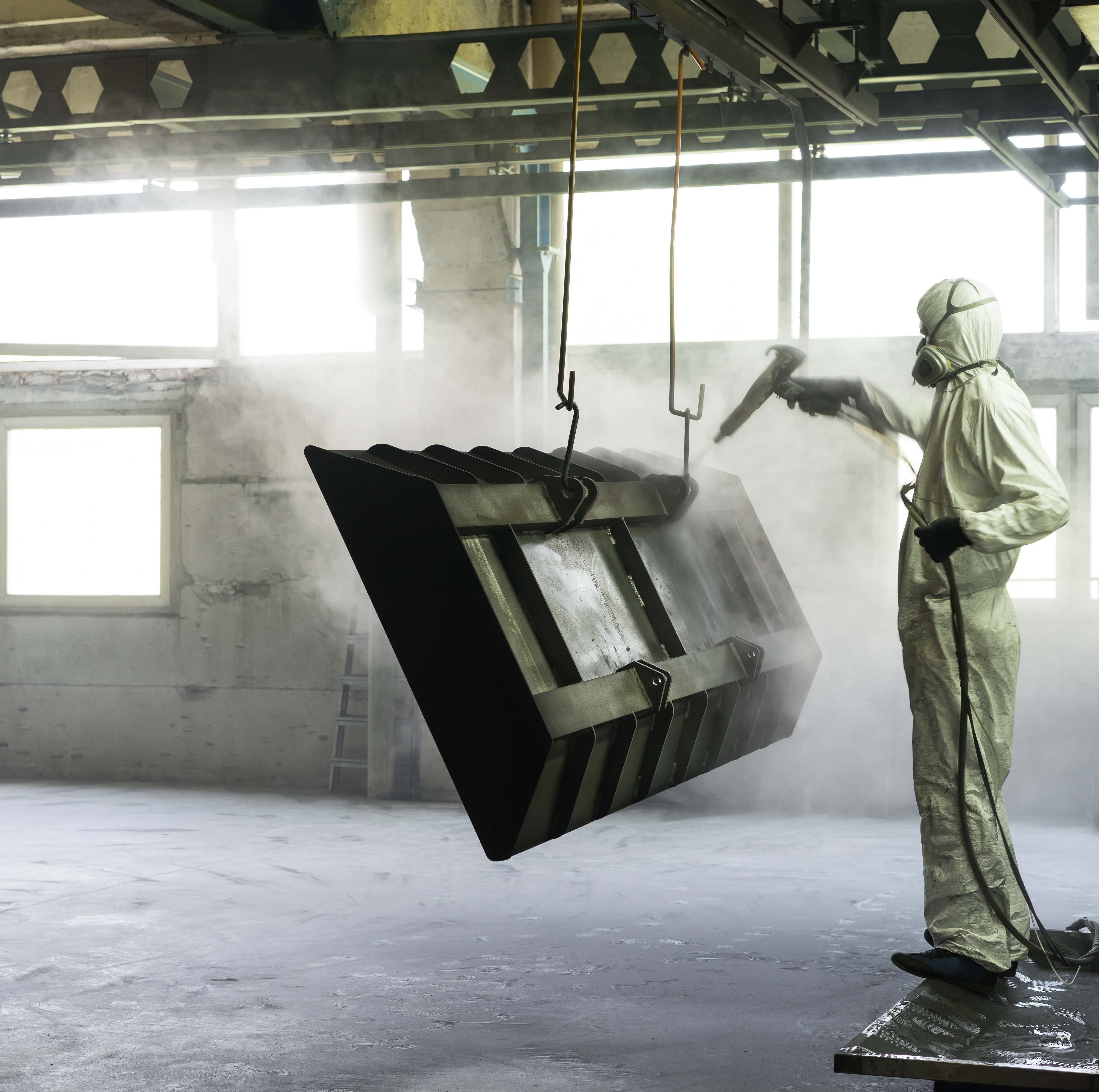
A torch hits a coated beam and the crew is already covered by a presumption they did not know existed. Under OSHA’s construction lead standard, 29 CFR 1926.62, cutting and torch burning on structures where lead-containing coatings or paint are present carry a legally presumed exposure of more than 2,500 micrograms of lead per cubic meter of air, which is fifty times the permissible exposure limit. That presumption applies from the first cut. It does not wait for a sampling pump, a lab turnaround or anyone’s professional judgment. In the OSHA cases reviewed below, the citations came from missing documents rather than from a measured overexposure.
The construction lead standard is the one OSHA health standard where the protection obligation can precede the measurement entirely. That design is the thing to understand before scheduling a demolition or renovation job on an older structure.
What is the OSHA permissible exposure limit for lead in construction?
Fifty micrograms per cubic meter of air, averaged over an 8-hour period, under 29 CFR 1926.62(c)(1). On shifts longer than eight hours the allowable time-weighted average drops by formula: 400 divided by hours worked that day, per 1926.62(c)(2). A 12-hour shift therefore carries a limit near 33 micrograms per cubic meter.
That number has not moved since OSHA issued the construction standard as an interim final rule in 1993. The scope at 1926.62(a) reaches all construction work where an employee may be occupationally exposed to lead, and it expressly picks up every construction activity that the general industry standard excludes at 29 CFR 1910.1025(a)(2). Demolition and salvage of structures containing lead, removal or encapsulation of lead materials, renovation of lead-containing substrates, lead contamination cleanup and on-site handling of lead waste are all named in that scope paragraph.
What is the action level under 1926.62, and what does crossing it trigger?
Thirty micrograms per cubic meter as an 8-hour time-weighted average, measured without regard to respirator use, per 1926.62(b). Crossing it on any single day makes initial blood lead and zinc protoporphyrin testing mandatory to offer. Crossing it on more than 30 days in any consecutive 12 months pulls the employer into the full medical surveillance program and annual training.
The phrase “without regard to the use of respirators” is doing real work. Exposure is judged on what the air around the worker contained, so issuing a respirator leaves the action level determination and the medical surveillance obligation exactly where they were.
Which construction tasks require lead protection before any air sampling result comes back?
1926.62(d)(2)(i) names them. Where lead-containing coatings or paint are present: manual demolition of structures, manual scraping, manual sanding, heat gun applications, and power tool cleaning with dust collection systems. Spray painting with lead paint is also listed. Each is presumed above the PEL and not above ten times it, so up to 500 micrograms per cubic meter.
Read the trigger carefully. The duty attaches where lead is present and the task is on the list. It is not conditioned on an expectation of overexposure, and it does not lift until the employer has performed the exposure assessment and documented that the employee performing the listed task is not exposed above the PEL.
Which lead tasks are presumed to exceed 500 micrograms per cubic meter?
Seven, under 1926.62(d)(2)(iii): using lead-containing mortar, lead burning, and, where lead-containing coatings or paint are present, rivet busting, power tool cleaning without dust collection systems, cleanup activities where dry expendable abrasives are used, and abrasive blasting enclosure movement and removal. The presumption holds until an assessment documents a figure below 500.
Two entries on that list catch contractors who believe they are outside the lead scope, because moving a blasting enclosure and sweeping up spent abrasive both feel like support work rather than lead work. The regulation puts them at ten times the PEL regardless.
Which lead tasks carry a presumed exposure of fifty times the PEL?
Four, under 1926.62(d)(2)(iv), where lead-containing coatings or paint are present on structures: abrasive blasting, welding, cutting, and torch burning. The employer must treat exposure as exceeding 2,500 micrograms per cubic meter, stated in the regulation as 50 times the PEL, until an assessment documents something lower.
This tier drives respirator selection hard. A presumed 2,500 micrograms per cubic meter against a 50 microgram limit demands an assigned protection factor well beyond a half-mask air-purifying respirator, which pushes most of these jobs toward powered air-purifying or supplied-air equipment on day one. If the employer does establish a lower actual exposure, 1926.62(d)(2)(iv) permits the respirator appropriate to that lower level. The sequence matters: the heavier protection comes first, and the sampling data relaxes it.
What protection does a crew get while the lead exposure assessment is still pending?
Six specific things, listed at 1926.62(d)(2)(v): appropriate respiratory protection under paragraph (f), protective clothing and equipment under paragraph (g), change areas under paragraph (i)(2), hand washing facilities under paragraph (i)(5), biological monitoring under paragraph (j)(1)(i) in the form of blood sampling and analysis for lead and zinc protoporphyrin, and training under paragraph (l) plus 29 CFR 1926.21.
That package is the heart of the construction standard and it has no counterpart in the general industry lead rule. Protective clothing comes at no cost to the employee and must be provided clean and dry at least weekly, and daily where exposure without regard to a respirator exceeds 200 micrograms per cubic meter as an 8-hour average, per 1926.62(g)(2)(i). Removing lead from clothing by blowing or shaking is prohibited outright by 1926.62(g)(2)(viii).
One escape route is closed deliberately. 1926.62(d)(3)(iv) lets an employer rely on objective data instead of initial monitoring in the ordinary case. 1926.62(d)(3)(iv)(B) then states that objective data “is not permitted to be used for exposure assessment in connection with paragraph (d)(2) of this section.” A manufacturer’s data sheet will not get a torch-cutting crew out of interim protection.
Does the lead compliance program have to exist before work starts?
Yes. 1926.62(e)(2)(i) requires a written compliance program established and implemented “prior to commencement of the job.” 1926.62(e)(2)(ii) fixes the contents, 1926.62(e)(2)(iii) requires frequent and regular inspections of the job site, materials and equipment by a competent person, and 1926.62(e)(2)(v) requires annual revision.
The content list is specific enough that a generic corporate lead policy will not satisfy it. The program must describe each activity in which lead is emitted, including equipment used, material involved, controls in place, crew size, employee job responsibilities, operating procedures and maintenance practices. It must name the specific means of achieving compliance, report the technology considered in meeting the PEL, include the air monitoring data documenting the source of emissions, carry an implementation schedule with supporting documentation such as purchase orders and construction contracts, and include a work practice program covering protective clothing, housekeeping and hygiene. On a multi-contractor site it must also describe the arrangements made among contractors for informing affected employees of potential exposure and for assigning compliance responsibility under 29 CFR 1926.16.
“Competent person” is defined at 1926.62(b) as one capable of identifying existing and predictable lead hazards in the surroundings or working conditions, with authorization to take prompt corrective measures to eliminate them. The authorization to stop the work is part of the definition, so the role cannot sit with someone who has training and no standing to halt a crew.
How long does an employer have to tell workers their lead air monitoring results?
Five working days. 1926.62(d)(8)(i) requires notification as soon as possible but no later than 5 working days after receipt of any monitoring results, either individually in writing or by posting in an accessible location. Where the result is at or above the PEL, 1926.62(d)(8)(ii) requires the notice to say so and to describe the corrective action taken or planned.
Blood lead results run on the same clock. 1926.62(j)(2)(iv)(A) gives the employer five working days from receipt to notify each employee in writing of their blood lead level.
What counts as a negative initial determination for lead in construction?
A written record. 1926.62(d)(5) requires that where the determination finds no employee exposed at or above 30 micrograms per cubic meter, the employer make a written record including the considerations at 1926.62(d)(3)(i), the date of the determination, the location within the worksite, and the name of each employee monitored.
Sampling has to be built to survive review. 1926.62(d)(1)(iii) requires personal samples representative of a full shift, with at least one sample for each job classification in each work area, either for each shift or for the shift with the highest exposure level. 1926.62(d)(9) sets the analytical accuracy at plus or minus 25 percent to a 95 percent confidence level for concentrations at or above 30 micrograms per cubic meter. That confidence requirement is where sampling results get argued, and it is worth reading alongside why the statistics behind a lead sampling result need a second set of eyes.
The determination is also not permanent. 1926.62(d)(7) requires additional monitoring whenever equipment, process, control or personnel change, or a new task begins, in a way that may expose additional employees at or above the action level or push already-exposed employees above the PEL. Swapping a dust-collecting grinder for a bare one moves the job between two different presumption tiers.
When is blood lead testing required on a construction job?
Initial blood lead and zinc protoporphyrin testing must be made available to any employee occupationally exposed on any day at or above the action level, per 1926.62(j)(1)(i). Interim-protection tasks trigger it immediately. Where exposure at or above the action level runs more than 30 days in any consecutive 12 months, 1926.62(j)(1)(ii) brings the full program.
The schedule then steps by result. 1926.62(j)(2)(i)(A) sets testing at least every two months for the first six months, then every six months. 1926.62(j)(2)(i)(B) accelerates that to every two months once a result reaches 40 micrograms per deciliter, continuing until two consecutive results fall below 40. Employees removed from exposure are tested at least monthly, per 1926.62(j)(2)(i)(C). Any result at or above the removal criterion requires a follow-up test within two weeks of the employer receiving it, per 1926.62(j)(2)(ii). Analysis must come from an OSHA-approved laboratory and hold accuracy within plus or minus 15 percent or 6 micrograms per deciliter, whichever is greater, under 1926.62(j)(2)(iii). Any employee with a blood lead level at or above 40 micrograms per deciliter in the preceding 12 months is owed an annual medical examination under 1926.62(j)(3)(i)(A). All of it is at no cost to the employee.
At what blood lead level must a construction worker be removed from lead work?
Fifty micrograms per deciliter, when a periodic test and a follow-up test both show it, under 1926.62(k)(1)(i). Return to former job status requires two consecutive tests below 40 micrograms per deciliter, per 1926.62(k)(1)(iii)(A)(1). Medical removal protection benefits run up to 18 months per occasion under 1926.62(k)(2)(i).
The benefit provision is the one that surprises contractors reading the standard for the first time. 1926.62(k)(2)(ii) defines medical removal protection benefits to mean that as long as the job the employee was removed from continues, the employer maintains the total normal earnings, seniority and other employment rights and benefits of that employee, as though the removal had not happened. A removed worker keeps their pay. 1926.62(k)(2)(vi) extends the same obligation to an employer who removes a worker voluntarily when the standard did not require it.
Does EPA’s RRP rule cover a commercial building renovation?
No. EPA ties the Renovation, Repair and Painting program at 40 CFR Part 745 to pre-1978 target housing and child-occupied facilities, which EPA describes as homes, childcare facilities and preschools. Most commercial and industrial buildings sit outside it. OSHA 1926.62 still applies to the crew in full.
This is the single most common misreading we see, and it runs in both directions. A plant renovation gets treated as an RRP job that needs a certified renovator it does not need, or, far worse, a commercial building gets treated as outside the lead rules entirely because RRP does not reach it. The worker-protection obligation does not depend on building type at all. For the residential and child-occupied side of the line, see the companion piece on lead paint requirements in commercial and residential renovation work.
What the enforcement record actually looks like
Two verified OSHA construction lead cases make the point better than any penalty table.
In July 2019, OSHA cited a New Jersey painting and wall covering contractor after inspecting a renovation site in Easton, Pennsylvania, issuing four willful violations and proposing $104,637 in penalties. Three of the willful items were failure to train employees on lead and hazardous chemicals, failure to conduct an initial determination of employee lead exposure, and operating with no written lead compliance program.
In January 2015, OSHA cited a Florida bridge coating company at a Georgia worksite with 13 serious citations and $58,800 in proposed penalties, including failure to train workers on lead hazards, failure to provide PPE to exposed workers, failure to develop a site-specific lead compliance plan, failure to provide showers, and failure to notify workers in writing of blood lead test results within five days.
Neither release reports a measured overexposure as the basis for the lead citations. Both turned on records. An inspector can establish a missing initial determination, a missing written program, missing training records and a blown five-day notification from documents alone, in one visit, without a sampling pump. Current penalty exposure under 29 CFR 1903.15(d) runs to $16,550 for a serious violation, $165,514 for a willful or repeated violation, and $16,550 per day for failure to correct. Those figures apply to penalties proposed after January 15, 2025 and have not been adjusted upward since.
The federal numbers have been still for a long time
Anyone treating the 50 microgram PEL and the 50 microgram per deciliter removal level as settled health science should look at the docket.
OSHA published an Advance Notice of Proposed Rulemaking on Blood Lead Level for Medical Removal at 87 FR 38343 on June 28, 2022, stating that OSHA was considering revision because adverse health effects in adults can occur at blood lead levels lower than the removal level and lower than the return level in the current standards. A Federal Register query on that rulemaking identifier returns exactly two documents, the 2022 notice and a 2022 comment period extension, and nothing has published in the four years since. OSHA’s own lead rulemaking page still shows the advance notice stage.
The one active OSHA lead rulemaking is narrower than it sounds. The proposal reopened for comment on July 22, 2026 revises substance-specific respirator requirements to allow different respirator types under the lead standards and to align them with the respiratory protection standard. It leaves the PEL, the action level and the blood lead triggers alone.
Meanwhile the health-based reference point sits far below the regulatory one. NIOSH’s blood lead guidance cites the Council of State and Territorial Epidemiologists reference value for adults at 3.5 micrograms per deciliter, and records that ACOEM and the California Department of Public Health recommend removal at two consecutive results between 20 and 29, and that Michigan requires removal at 30. California rewrote its own rule rather than wait: 8 CCR 1532.1 took effect January 1, 2025 with a construction PEL of 10 micrograms per cubic meter, an action level of 2, and medical removal at 30 micrograms per deciliter, tightening again on January 1, 2026. A worker torch-cutting identical coated steel is protected to one fifth the air concentration in Los Angeles that they are in Wichita.
Kansas, Missouri, Oklahoma, Nebraska, Texas and Colorado
None of the six has an OSHA-approved State Plan covering private sector employers. OSHA’s state plan list names 22 plans with private sector coverage and seven more limited to state and local government employees, and none of the six appears on either list. Federal OSHA enforces 1926.62 directly, exactly as written, with no state variant and no stricter state exposure limit.
The state layer that does differ is abatement licensing, and it is a separate program from worker protection. Kansas licenses lead work through KDHE under K.S.A. 65-1,200 et seq.. K.S.A. 65-1,203(a) bars a business entity or public agency from engaging in a lead-based paint activity without a license, and 65-1,203(b) bars an individual from doing so without a certificate earned through accredited training and a third-party examination. K.S.A. 65-1,204(a) makes the licensed firm responsible for ensuring every employee or agent doing the work is certified. KDHE issues two firm license types, Lead Activity Firm and Lead Renovation Firm, covering lead abatement, inspections, risk assessments, abatement project design and renovation activities.
The Kansas program is residential in design, and that is where contractors get caught. K.S.A. 65-1,201 defines “habitation” as a place of abode or residence constructed before 1978, and K.S.A. 65-1,203(c) lets a business or public agency that owns or leases a nonresidential dwelling perform lead-based paint activities in that facility without a license, provided the work follows state and federal requirements. A Kansas industrial or commercial job can therefore sit outside the KDHE license requirement while staying entirely inside 1926.62. The absence of a state license requirement leaves the federal worker-protection obligation untouched, and the federal one carries the $165,514 ceiling.
Where this lands on a real job
The decision point is earlier than most schedules assume. By the time a crew is mobilized and a pump is on someone’s belt, the interim protection obligation has already been running. The work that has to happen before mobilization is a coating determination on the structure, a scan of the scope against the three task lists at 1926.62(d)(2), the written job-specific compliance program, the respirator and change area logistics for whichever tier applies, and the baseline blood draws. That sequence is also what keeps the file defensible, which both verified enforcement cases above suggest is the thing OSHA actually writes up.
The same pre-job survey logic governs asbestos on a demolition project, and the asbestos abatement guide covers that side of the pre-demolition workup. On most older structures the two surveys happen together because the same crew is about to disturb both materials.
iSi has run mold, IAQ and lead projects for Kansas facilities for two decades. If you have a demolition or renovation scope that touches coated steel or painted substrate and no exposure data on file yet, the useful next step is a coating determination and a personal sampling plan built to the 1926.62(d)(9) accuracy requirement, which is what our industrial hygiene group does, paired with lead abatement where the scope calls for removal. Send the scope and the building age and we will tell you which tier the work falls into.
Sources
- 29 CFR 1926.62, Lead (construction): https://www.ecfr.gov/current/title-29/part-1926/section-1926.62 (verified 2026-10-13)
- 29 CFR 1903.15, Proposed penalties: https://www.ecfr.gov/current/title-29/part-1903/section-1903.15 (verified 2026-10-13)
- 29 CFR 1910.1025, Lead (general industry): https://www.ecfr.gov/current/title-29/part-1910/section-1910.1025 (verified 2026-10-13)
- OSHA Lead rulemaking status: https://www.osha.gov/lead/rulemaking (verified 2026-10-13)
- Federal Register, Lead, OSHA, reopening of the rulemaking record, July 22, 2026: https://www.federalregister.gov/documents/2026/07/22/2026-14851/lead (verified 2026-10-13)
- Federal Register, ANPRM, Blood Lead Level for Medical Removal, 87 FR 38343: https://www.federalregister.gov/documents/2022/06/28/2022-13696/advance-notice-of-proposed-rule-making-anprm-blood-lead-level-for-medical-removal (verified 2026-10-13)
- OSHA State Plans: https://www.osha.gov/stateplans (verified 2026-10-13)
- U.S. Department of Labor, OSHA news release, New Jersey contractor lead hazards, July 24, 2019: https://www.dol.gov/newsroom/releases/osha/osha20190724 (verified 2026-10-13)
- U.S. Department of Labor, OSHA news brief, bridge coating company lead hazards, January 26, 2015: https://www.dol.gov/newsroom/releases/osha/osha20150126-2 (verified 2026-10-13)
- NIOSH, Blood Lead Level Guidance: https://www.cdc.gov/niosh/lead/bll-reference/index.html (verified 2026-10-13)
- California Code of Regulations, Title 8, Section 1532.1, Lead: https://www.dir.ca.gov/title8/1532_1.html (verified 2026-10-13)
- Cal/OSHA news release 2025-47, lead exposure prevention guidance for construction: https://www.dir.ca.gov/DIRNews/2025/2025-47.html (verified 2026-10-13)
- EPA Lead Renovation, Repair and Painting Program: https://www.epa.gov/lead/lead-renovation-repair-and-painting-program (verified 2026-10-13)
- Kansas lead statutes, K.S.A. 65-1,200 et seq.: https://www.kdhe.ks.gov/DocumentCenter/View/2587/Kansas-Lead-Statutes-PDF (verified 2026-10-13)
- KDHE lead licensing: https://www.kdhe.ks.gov/1544/Licensing (verified 2026-10-13)