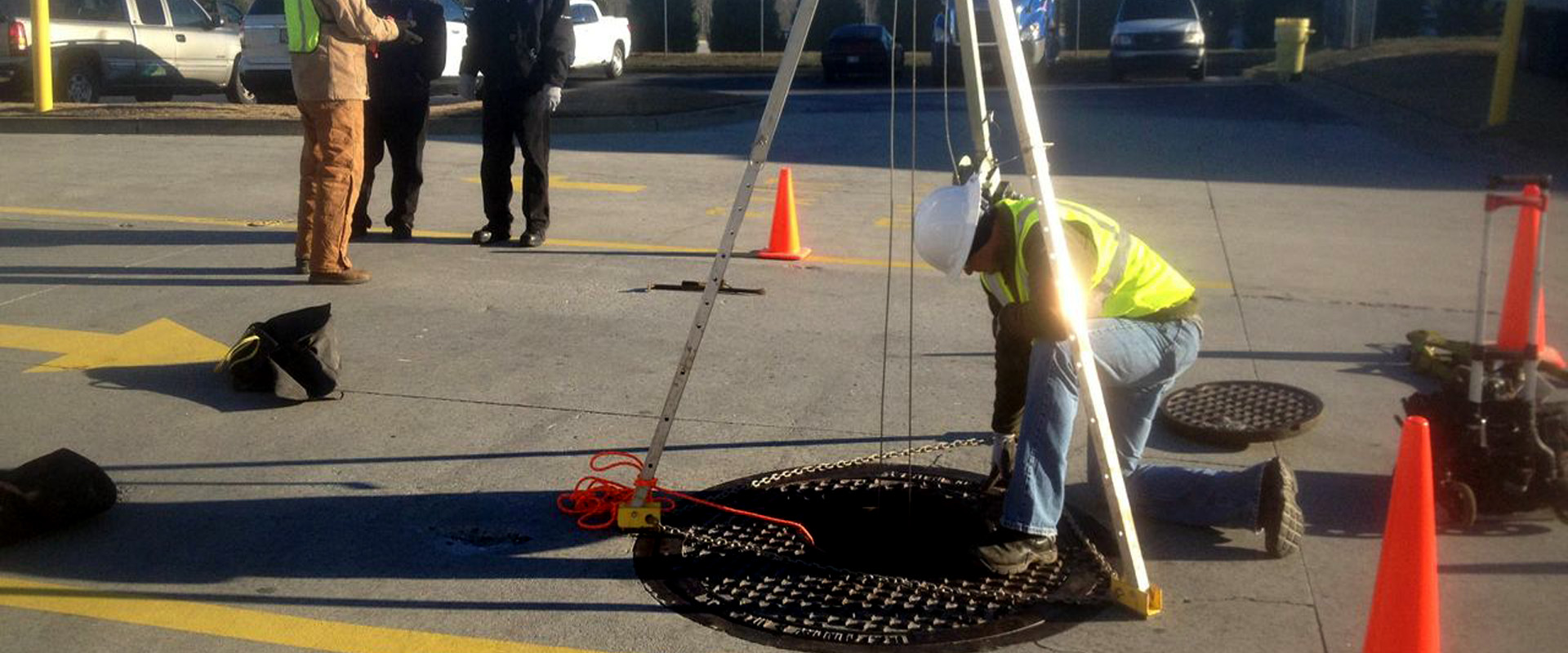
OSHA Trenching Competent Person Requirements 2026: After the $4.6M Revoli Case
OSHA trenching competent person requirements have teeth. Learn what changed after the April 2026 Revoli Construction case ($4.6M fine), what your designation must include, and how to pass an OSHA inspection.
On November 18, 2025, a cave-in in South Yarmouth, Massachusetts killed 61-year-old Miguel Reis. Five months later, OSHA issued citations against Revoli Construction totaling $4,699,362 — the largest single-employer trenching fine in New England in 25 years. Seven willful violations. Thirty-three repeat violations. Seventeen serious violations. The company had shoring systems installed outside design specifications. Spoil piles too close to the excavation edge. Inadequate means of egress. Protective equipment that was damaged.
The company had a designated competent person on paper.
This is not a story about a bad actor operating in a regulatory vacuum. Revoli had a 25-year history with OSHA, including a willful trenching citation from 1999. They knew the standard. They had documentation. What they did not have—or did not enforce—was a competent person who could actually stop work.
That is where the 2026 trenching enforcement landscape is moving. Not toward gotchas on paperwork. Toward the line between compliance on paper and compliance on the job site.
The Competent Person Rule: What “Authorized” Actually Means
Who is a competent person under OSHA’s trenching standard?
The definition lives at 29 CFR 1926.650(b). Read it carefully, because the two operative words are not “designated” or “trained.” They are “capable” and “authorization.”
“One who is capable of identifying existing and predictable hazards in the surroundings, or working conditions which are unsanitary, hazardous, or dangerous to employees, and who has authorization to take prompt corrective action to eliminate them.”
The authorization part is not ceremonial. Under 29 CFR 1926.651(k), that competent person must conduct daily inspections before work starts, throughout the shift, and after any hazard-increasing event (rainstorm, equipment movement, additional depth). If the person conducting the inspection has no authority to halt work, they are not a competent person under the standard—they are an observer.
This distinction shows up repeatedly in 2025–2026 citations. The designated competent person was present. The designated competent person identified the hazard. The designated competent person was not empowered to stop the work.
What does “authorization to take prompt corrective action” mean in practice?
It means the competent person can:
- Stop excavation work immediately if a hazard is identified
- Order removal or repair of a protective system installed outside design specifications
- Require installation of additional protective measures
- Mandate re-classification of soil if initial assessment was wrong
- Require atmospheric testing if conditions suggest potential hazards
- Order workers out of the trench if the system fails or shows deterioration
This authority must be documented in writing before excavation begins. Not a verbal agreement. Not an implied understanding. A written statement that names the individual and explicitly grants them the power to stop work. That written designation is the first item cited when OSHA finds a cave-in. It was cited in the Revoli case.
The April 2026 Revoli Construction Case: Pattern and Precedent
The Revoli citation sets the enforcement tone for the rest of 2026. Understand what OSHA cited and you understand what they are looking for now.
What happened on the site?
Revoli was conducting excavation work in South Yarmouth on November 18, 2025. The company was digging a trench deeper than 5 feet. 29 CFR 1926.652(a)(1) requires a protective system in any trench 5 feet or deeper unless the excavation is entirely in stable rock. Revoli had installed a shoring system. The problem: the system was installed outside the manufacturer’s design specifications. The equipment was damaged. Spoil piles were stacked within 2 feet of the trench edge, violating 29 CFR 1926.651(j)(2). There was inadequate egress—workers could not exit the trench within 25 feet of lateral travel, as required by 29 CFR 1926.651(c)(2).
One worker was killed. The site inspection that followed yielded the largest trenching fine ever issued in New England.
What did OSHA cite?
According to the OSHA news release dated April 1, 2026:
- 7 willful violations at $165,514 each (the maximum per violation)
- 33 repeat violations (reflecting Revoli’s prior 1999 willful finding and other history)
- 17 serious violations at $16,550 each
The total: $4,699,362.
The willful classification is the critical detail. OSHA issues willful citations only when an employer knew or should have known of the regulatory requirement and consciously disregarded it. To reach that threshold, the agency examined Revoli’s prior violation history (1999 willful), training records, and the specific deviations from design specs and regulatory requirements observed on the November 2025 site.
A competent person designation does not protect you if OSHA proves the designated person lacked training, authority, or presence on site.
Competent Person Training: What OSHA Actually Requires
Does OSHA mandate a specific competent person course?
No. OSHA does not certify or mandate a specific competent person training program for Subpart P. However, the training must cover specific content.
Under 29 CFR 1926.650(b) and Appendix A, a competent person must understand:
- Soil classification per Appendix A — identifying stable rock, Type A, Type B, and Type C soil based on internal friction angle, cohesion, and moisture
- Protective systems per Appendix B (sloping/benching) — angles and dimensions based on soil type and trench depth
- Shoring systems per Appendices C and D — timber shoring and aluminum hydraulic shoring design, installation, and limits
- Trench shields and boxes — manufacturer specifications, which components cannot be damaged, how to position them
- Protective system selection — when each system type is appropriate for the soil and depth
- Daily inspection protocols — what to document, how to record findings, when to require corrective action
- Atmospheric testing requirements — when the standard requires air quality testing in excavations greater than 4 feet deep
- Means of egress — the 25-foot rule and alternatives (ladders, ramps, stairs)
The training must result in documented evidence that the competent person understands these topics and can make sound judgments about hazards and protective systems. A one-hour safety meeting does not satisfy this standard. A competent person should be able to explain soil classification using the Appendix A framework, identify why a particular shoring system is appropriate or inappropriate for observed soil conditions, and describe the inspection checklist they will use daily.
Many contractors use OSHA’s eTool on Trenching (available at OSHA’s Construction eTool page) as a reference or self-study, but that alone does not constitute training. The designation must be backed by documented evidence that someone trained the person, tested their knowledge, and verified they can perform the role.
Depth Triggers and Protective System Requirements
What triggers the requirement for a protective system?
29 CFR 1926.652(a)(1) is unambiguous: Any trench 5 feet or deeper requires a protective system unless the excavation is entirely in stable rock, and a competent person has documented the determination that no cave-in hazard exists.
The 5-foot threshold is not negotiable. A trench 4 feet 11 inches deep falls outside the scope. A trench 5 feet 1 inch deep requires protection.
What if the trench is deeper than 20 feet?
29 CFR 1926.652(b)(4) raises the bar at 20 feet: protective systems for trenches deeper than 20 feet must be designed by a registered professional engineer. Manufactured protective systems (pre-engineered shoring boxes, hydraulic shoring, etc.) can be used above 20 feet if the manufacturer provides tabulated data for that depth range. At 20 feet and deeper, a PE-designed system is mandatory.
What are the four options for protective systems?
The standard permits:
- Sloping — cutting the trench wall at an angle based on soil type (typically 45° for Type B soil, steeper for Type A, shallower for Type C)
- Benching — cutting a step pattern into the trench wall instead of sloping uniformly
- Shoring — supporting the wall with timber (Appendix C) or hydraulic/aluminum systems (Appendix D)
- Trench shields or boxes — protective barriers installed per manufacturer specifications
The choice depends on the soil type, trench depth, available space, and equipment. A competent person must be able to explain why a particular system is appropriate for the conditions observed on that specific project.
Daily Inspection Requirements: Where Citations Cluster
What must a competent person inspect and document daily?
Under 29 CFR 1926.651(k)(1), the competent person must conduct inspections:
- Before work starts each day
- As needed throughout the shift (typically every 2–4 hours for active work)
- After every rainstorm (water changes soil cohesion and stability)
- After any hazard-increasing occurrence (equipment movement, vibration from nearby traffic, additional digging that changes soil profile)
The inspection must evaluate:
- The excavation and adjacent areas for evidence of soil failure or cave-in
- The condition and integrity of protective systems (shoring, sloping, shielding)
- Changes in soil composition or moisture
- Condition of equipment used in the excavation
- Presence of water or other hazardous conditions (atmospheric, liquid)
Documentation is the single most important defense. Written inspection logs are cited less frequently than missing protective systems because contractors who keep inspection logs also tend to maintain protective systems. The log proves the competent person was present, observed conditions, and took corrective action if hazards were found.
The Revoli case did not cite missing inspection logs explicitly—the investigation centered on the protective system failure itself. But in 70% of trenching enforcement cases from 2024–2026, inadequate or missing inspection documentation appears in the citation sequence.
The Competent Person Audit Checklist: Six Questions That Determine Your Exposure
Before you consider your trenching operation compliant, a competent person should be able to answer these six questions. If the answer to any is unclear or documented, you have a competent person gap.
1. Written Designation — Is the competent person named in writing in the project safety plan, with explicit authorization to stop work?
Example of compliant language: “John Smith is designated as the competent person for excavations on this project. Mr. Smith has authority to halt all excavation and protective system work if he identifies conditions that do not meet [OSHA Subpart P / 29 CFR 1926.650–1926.652] or the project specifications. All supervisors and workers will comply with Mr. Smith’s corrective action orders.”
Red flag: “Excavation supervisor will act as competent person as needed” — this is a non-compliant designation because it does not name the individual and does not explicitly grant authority.
2. Training Documentation — Can you produce evidence that the competent person was trained in soil classification, protective systems, and daily inspection protocols?
What counts: Signed training records showing the competent person completed a course covering Appendix A soil classification, Appendices B–D protective systems, and 29 CFR 1926.651(k) inspection requirements.
What does not count: A statement that “the competent person is experienced” or “attended a safety meeting.”
3. Authority to Stop Work — Did the competent person demonstrate this authority on at least one occasion (as documented in inspection logs or corrective action records)?
This is not asking whether the authority exists in writing. It is asking whether the organization demonstrated that the authority is enforced. If the competent person identifies a hazard and work does not stop, the designation is performative, not functional.
4. Daily Inspection Logs — Are inspection records available for every day of excavation, documenting soil conditions, protective system status, and any corrective actions?
The log should include:
- Date and time of inspection
- Competent person name
- Soil classification observed
- Protective system condition (intact, damage, deviations from design)
- Any hazards identified
- Corrective action taken (or reason corrective action was not required)
Logs can be simple (a single-page daily form) or detailed (narrative notes), but they must be site-specific, dated, and signed by the competent person.
5. Soil Classification Method — Can the competent person explain the method used to determine soil type?
Under Appendix A, soil classification is based on internal friction angle, cohesion, and moisture. A competent person should describe how they determined the soil type at that site (visual observation, test pits, boring logs, engineering report, prior experience at similar sites).
Red flag: “The soil looked stable” without reference to Appendix A criteria.
6. Egress Verification — Are workers within 25 feet of a ladder, ramp, or stairway that allows exit from the trench without climbing more than 4 feet vertically?
29 CFR 1926.651(c)(2) is explicit. If a worker is 30 feet laterally from the nearest exit, the system is non-compliant, regardless of how excellent the shoring is. A competent person must verify this on every shift and document it.
If you can answer “yes” with supporting documentation to all six questions, your competent person designation is likely defensible. If you cannot, you have a serious exposure.
National Emphasis Program: Why Trenching Inspections Are the Default
OSHA’s National Emphasis Program on Trenching and Excavation (CPL 02-00-161), issued October 1, 2018 and still active in 2026, directs compliance officers to open an inspection on any excavation they encounter during normal duties. This is not a complaint-driven program. If a compliance officer sees a trench during a facility visit, they can inspect it.
The NEP also flags trench fatalities for criminal referral where willful conduct caused death. That is not a civil penalty. That is criminal prosecution of owners and supervisors. The Revoli case involved a fatality, but no criminal referral was announced—OSHA instead pursued willful and repeat civil citations. However, earlier cases in 2024–2025 have resulted in criminal charges.
Why does this matter for contractors in Kansas, Oklahoma, Missouri, and Nebraska?
Federal OSHA has jurisdiction over private-sector trenching work in all four states. There is no state-plan variation. CPL 02-00-161 applies directly. The Kansas City Area Office can and does open trenching inspections based solely on the observation of an excavation.
The Trend: Penalties and Enforcement Escalation
Trenching fatalities dropped from 39 in 2022 to 15 in 2023 to 12 in 2024. OSHA credits this 70% decline to the NEP and aggressive enforcement. Translation: the contractors who are still operating in 2026 are the ones who invested in real competent-person capacity. Those who did not have exited the market or faced catastrophic fines.
The 2026 enforcement picture:
- Repeat and willful classifications are now the default, not the exception. The Connecticut concrete contractor cited in early 2026 faced $1.2M+ specifically because OSHA found a pattern of continued non-compliance.
- Serious violation penalties are $16,550 per violation (as of the 2026 inflation adjustment).
- Willful and repeat violations max out at $165,514 per violation.
- Stacking is automatic. A single trench with multiple violations (missing protective system, inadequate egress, spoil pile too close, inadequate inspection log) generates multiple citations, one per violation type.
The April 2026 Revoli case signals to the construction and utility industries: OSHA is not moving toward leniency. The Revoli decision was published not to educate, but to enforce a standard that has been stable since 1989. The enforcement is escalating.
Compliance Roadmap: Defensive Strategy for 2026
1. Write and distribute the competent person designation.
Name the individual, state their qualifications, and explicitly grant authority to stop work. Include this in the project safety plan. Communicate it to all crew members before excavation begins.
2. Document training.
Maintain signed, dated training records for your designated competent person(s). Include evidence that they understand Appendix A soil classification, Appendices B–D protective systems, and daily inspection protocols. A certificate from a reputable provider (OSHA eTool, ICWGIA, AGC, or similar) is strong evidence.
3. Establish and execute a daily inspection protocol.
Before work starts, the competent person inspects the excavation and protective systems. This is documented in a log that includes the date, time, competent person name, soil conditions, system status, and corrective action (if any). Keep logs on site or accessible for review.
4. Verify protective system compliance.
Ensure the system matches the design specs (depth, soil type, installation details). Visually inspect shoring, sloping, or shields daily. Do not continue work if equipment is damaged, installed outside specifications, or showing signs of failure.
5. Monitor spoil piles and egress.
Keep spoil piles at least 2 feet back from the excavation edge. Ensure workers have a ladder, ramp, or stairs within 25 feet of lateral travel. Document this in inspection logs.
6. Test atmosphere in deep excavations.
If the trench exceeds 4 feet and conditions suggest potential atmospheric hazards (enclosed spaces, decomposing materials, adjacent contamination), conduct oxygen and hazardous-gas testing before workers enter. Document results.
7. Prepare for inspection.
Before OSHA arrives, have competent person designation, training records, inspection logs, and protective system design documentation ready. These four items are the first things a compliance officer will request.
iSi’s Competent Person Support
Competent person training, site inspections, and excavation audits are part of iSi’s safety program consulting and industrial hygiene services. We support contractors and utilities in Kansas, Oklahoma, Missouri, Nebraska, and Texas with:
- Competent person training and designation support — ensuring the role is properly documented and the person has the expertise to execute it
- Excavation audits — reviewing your current excavation program against Subpart P requirements
- Daily inspection log design — building a documentation system that becomes your primary defense
- Protective system review — evaluating whether your shoring, sloping, or shielding systems match current design standards
The cost of a proactive compliance assessment is a fraction of the exposure. Willful violations cost $165,514 each. A cave-in fatality exposure opens criminal referral. An iSi safety audit that identifies and helps you close competent-person gaps is the cost of one inspection ticket.
Sources
- 29 CFR 1926.650 — Scope, application, and definitions (OSHA)
- 29 CFR 1926.651 — General requirements for all excavations (OSHA)
- 29 CFR 1926.652 — Requirements for protective systems (OSHA)
- 29 CFR 1926 Subpart P — Excavations (eCFR, current)
- OSHA eTool — Construction: Trenching Competent Person
- OSHA Trenching and Excavation Overview
- CPL 02-00-161 — National Emphasis Program on Trenching and Excavation (OSHA directive page)
- OSHA news release — DOL cites Revoli Construction with 7 willful, 33 repeat violations after fatal Yarmouth cave-in (April 1, 2026)
- OSHA news release — Department of Labor encouraged by decline in worker death investigations (November 4, 2024)
- OSHA Trenching and Excavation Safety publication OSHA 2226-10R
- OSHA Trenching and Excavation Fact Sheet
- BLS Census of Fatal Occupational Injuries Summary, 2024