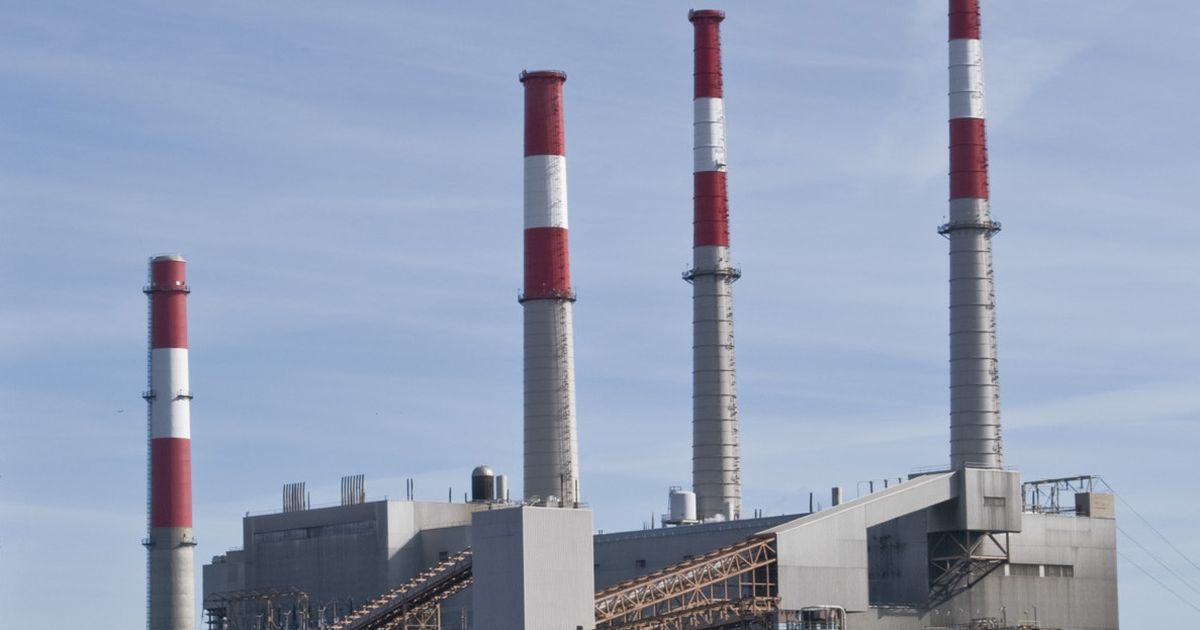
Plywood and Composite Wood NESHAP: 2026 Compliance Requirements for Panel Plants and Lumber Kilns
EPA's final PCWP NESHAP takes effect July 6, 2026, reaching 219 major-source facilities. Here's what plywood, OSB, MDF, and lumber-kiln operators must do to comply.
If you run air compliance at a plywood, OSB, particleboard, or MDF plant — or you operate lumber kilns at a facility that clears the major-source threshold — the rule that governs your process units changes on July 6, 2026. EPA finalized amendments to the National Emission Standards for Hazardous Air Pollutants (NESHAP) for the Plywood and Composite Wood Products (PCWP) source category, and the changes are not cosmetic. The rule sets maximum achievable control technology (MACT) limits on process units that ran under “no-control” determinations for nearly two decades, pulls 126 kiln-dried lumber operations squarely into the affected source, and eliminates a compliance-flexibility option that existing sources have relied on.
This is the practitioner’s read: what the rule actually requires, who it reaches, what it costs, and where EPA gave the industry real accommodations. Every regulatory figure below is cited to the primary source.
What is the PCWP NESHAP and what does the 2026 final rule change?
The PCWP NESHAP — 40 CFR part 63, subpart DDDD — sets MACT air-toxics standards for plywood and composite wood manufacturers. The 2026 final rule, effective July 6, 2026 (FR Doc. 2026-13550), sets limits for process units the 2004 rule left as “no-control” and answers a petition for reconsideration of the 2020 residual risk and technology review (RTR).
The backstory matters because it explains why previously unregulated units are now in scope. When EPA issued the original PCWP rule in 2004, it set “no-control” MACT floors for several process units. In 2007 the D.C. Circuit vacated and remanded those determinations. EPA never filled the hole — it explicitly deferred those units in the 2020 RTR. This 2026 rule closes that 19-year gap by setting actual emission limits for the deferred units, and it responds to a petition arguing EPA failed to set limits for unregulated HAP (FR Doc. 2026-13550). If your plant assumed a green rotary dryer or a reconstituted-wood press was permanently outside the rule, that assumption expires on July 6.
When does the 2026 PCWP NESHAP take effect and when must my facility comply?
The rule is effective July 6, 2026. New and reconstructed sources generally comply upon startup or the effective date, whichever is later. Existing sources receive a compliance window set in 40 CFR 63.2233 — typically up to three years under Clean Air Act section 112(i)(3), which points to roughly July 6, 2029.
Do not treat the three-year window as a default you can bank on. The precise existing-source date is fixed in the codified regulatory text at 40 CFR 63.2233, not in the preamble, and your Title V permit may drive an earlier obligation depending on how your delegated authority folds the standard in. Confirm the exact date against §63.2233 and your permit before you calendar it. For new or reconstructed units, the clock is already running — plan compliance at startup.
Which facilities are covered by the PCWP NESHAP?
The rule covers 219 major-source facilities: 93 that manufacture PCWP and 126 that operate kiln-dried lumber (FR Doc. 2026-13550). A facility is a major source if it emits, or has the potential to emit, 10 tons per year of any single HAP or 25 tons per year of any HAP combination site-wide — 9.07 Mg / 22.68 Mg in metric terms.
Covered NAICS codes are 321113, 321211, 321212, 321215, 321219, and 321999. The PCWP definition is broad: plywood, veneer, particleboard, oriented strand board (OSB), hardboard, fiberboard, medium density fiberboard (MDF), laminated strand lumber, laminated veneer lumber (LVL), wood I-joists, glue-laminated beams, and kiln-dried lumber. If your product sits anywhere on that list and your site-wide HAP potential-to-emit crosses the 10/25 threshold, you are in the affected source.
Does the PCWP NESHAP apply to a lumber kiln operation that doesn’t press panels?
Yes. Lumber kilns located at any covered facility are part of the affected source, which is why 126 of the 219 regulated facilities are kiln-dried lumber operations (FR Doc. 2026-13550). A site that only dries lumber and never presses a panel can still be regulated if its total HAP potential-to-emit crosses the 10/25 ton-per-year major-source threshold.
This is the least obvious consequence of the rule, and the one most likely to catch an EHS manager flat-footed. Lumber-drying releases HAP — formaldehyde, methanol, acetaldehyde, and other compounds volatilize off wood as it dries. A high-throughput softwood kiln operation that never considered itself an air-toxics source can quietly sit above the major-source line on potential-to-emit. Run the PTE math site-wide before you conclude the rule doesn’t touch you. If you are near the line, document the basis for any area-source claim now, because the delegated authority will ask for it.
What pollutants and process units does the rule newly regulate?
The rule sets MACT limits for total HAP — acetaldehyde, acrolein, formaldehyde, methanol, phenol, and propionaldehyde — plus non-mercury HAP metals, mercury, hydrogen chloride, polycyclic aromatic hydrocarbons (PAH), dioxin/furan (D/F), and methylene diphenyl diisocyanate (MDI) (FR Doc. 2026-13550). It newly regulates process units that previously ran under “no-control” determinations, including green rotary dryers, tube dryers, reconstituted wood product presses, blow-line blend tube dryers, and miscellaneous coating operations.
If your plant operates any of those units, the near-term work is concentrated there. These are the units that historically had no performance-test obligation and no control requirement. Now they have both. The engineering question is whether existing capture and control already meets the new limit or whether you need to test, retrofit, or reroute.
What are the compliance options for meeting PCWP emission limits?
Facilities can meet the limits three ways: install a control system achieving at least 90% efficiency; comply with a production-based emission limit expressed as HAP per unit of product; or use emissions averaging across a group of sources. Emissions averaging is available only at existing sources — and the 2026 rule removes that option going forward, narrowing the flexibility that some plants have used to balance a high-emitting unit against a cleaner one (FR Doc. 2026-13550).
The removal of emissions averaging is the compliance-strategy headline. If your current program leans on averaging to keep a particular dryer or press in compliance, that lever is disappearing. Re-run each unit against a standalone limit. A unit that was compliant only inside an averaging group may need its own control or a production-based approach once averaging is off the table. Do that analysis before your compliance date, not after a stack test tells you.
What lumber-kiln inspection and tune-up requirements does the 2026 rule impose?
Covered facilities must implement an operation and maintenance (O&M) plan for lumber kilns, perform an annual kiln integrity inspection no later than 13 months after the previous one, and conduct annual burner tune-ups and grate inspections no more than 13 months apart. Corrective actions must be initiated within 30 days and completed within 180 days of the inspection identifying the need, with extensions available through the delegated authority (FR Doc. 2026-13550).
Build these into your recurring compliance calendar now. The 13-month ceiling is a hard backstop, not a target — a missed inspection window is a self-created deviation that shows up in your semiannual compliance report. Set the O&M plan up so the integrity inspection, burner tune-up, and grate inspection are tracked as separate recurring tasks with documented completion dates, and wire the 30-day/180-day corrective-action timeline into whatever system logs the findings.
What monitoring, testing, and reporting does subpart DDDD require?
Facilities must conduct performance testing for new and existing source emission limits, monitor process-unit bypass stack usage at all times, and meet monitoring, recordkeeping, and electronic reporting requirements. A Notification of Compliance Status is required, and the emissions-averaging compliance option for existing sources is being eliminated (FR Doc. 2026-13550).
Continuous bypass-stack monitoring is the requirement to flag early — “at all times” means your monitoring approach has to capture every bypass event, not just scheduled test windows. Performance testing on the newly regulated units is the other near-term lift, because those units may never have been stack-tested before. The Notification of Compliance Status is the document that memorializes all of it, and a late or incomplete NOCS is one of the most common self-created violations in NESHAP enforcement.
What is the penalty for violating the PCWP NESHAP?
NESHAP violations are Clean Air Act violations. EPA can assess administrative civil penalties of up to $44,539 per day per violation (40 CFR 19.4, January 2025 inflation adjustment), with higher amounts available in judicial actions. The figure is frozen at 2025 levels for 2026 because no inflation adjustment was made this year (OMB M-26-11).
Per-day, per-violation exposure compounds fast. A single missed performance test, an incomplete O&M plan, and a late Notification of Compliance Status are three separate violations, each accruing daily. The practical takeaway: the penalty math punishes the paperwork failures — missed tests, incomplete plans, late notifications — as hard as it punishes an actual emission exceedance. Get the documentation right and you close off most of the exposure.
How much will PCWP NESHAP compliance cost the industry?
EPA estimates a total annualized cost of $53 million (2024 dollars) across the 219 affected facilities, in exchange for roughly 720 tons per year of HAP and 8,500 tons per year of VOC reductions (FR Doc. 2026-13550). Per-facility cost varies widely with the number and type of process units and whether existing controls already meet the new limits.
Do not read the $53 million as a uniform per-plant number. Spread across 219 facilities it averages out to a modest figure, but the average hides the real distribution. Many facilities already operate control systems that exceed 90% efficiency, so their marginal cost is low. The cost concentrates in facilities running the previously uncontrolled units — green rotary dryers, tube dryers, reconstituted-wood presses — that now need testing and, in some cases, control. Your facility’s number depends entirely on your unit mix and your existing controls, so build a site-specific estimate rather than trusting the industry average.
Do Kansas, Oklahoma, Missouri, Texas, or Nebraska have different PCWP requirements?
Subpart DDDD is a federal MACT standard implemented through the Title V permit program by the state or local delegated authority. The federal floor applies uniformly across the region — Kansas (KDHE), Oklahoma (DEQ), Missouri (DNR), Texas (TCEQ), and Nebraska (NDEE) — but each delegated agency handles permitting, compliance schedules, corrective-action extension requests, and electronic reporting.
No state in the region is known to impose a more stringent PCWP-specific air-toxics limit than the federal rule. What varies is procedure, not the emission floor: which portal you report through, how your compliance schedule is written into your Title V permit, and how you request a corrective-action extension. Confirm your delegation status and the exact reporting mechanics with your permitting agency — the substance is federal, the administration is local.
Can the 2026 PCWP rule still be challenged in court?
Yes. Under Clean Air Act section 307(b)(1), judicial review is available only by petition to the U.S. Court of Appeals for the D.C. Circuit, and the deadline to file was September 4, 2026 (FR Doc. 2026-13550). A pending challenge does not stay the rule’s requirements unless a court orders it.
Plan to comply on schedule regardless of any litigation. Specific limits could shift if a challenge succeeds, but a petition for review does not pause your obligations — you remain fully liable for compliance while any case is pending unless and until a court issues a stay. Building a compliance program around the hope that the rule gets softened is not a strategy; it is exposure.
The other half of the story: where EPA gave the industry relief
The dominant framing — “EPA cracks down, $53 million in new costs” — is only half accurate. EPA finalized the rule largely as proposed but granted several industry-requested accommodations, and an honest compliance read has to account for them.
First, the inspection and tune-up cadence is not a hard 12 months. Annual kiln integrity inspections and burner tune-ups may occur up to 13 months apart, giving operators a one-month buffer to schedule around production without triggering a deviation (FR Doc. 2026-13550). Second, corrective actions are not required “immediately.” The rule allows 30 days to initiate and 180 days to complete, with extensions available through the delegated authority — a realistic timeline for sourcing parts and scheduling downtime rather than a compliance trap. Third, the $53 million cost is concentrated, not uniform: many facilities already run controls exceeding 90% efficiency, so the marginal cost lands on the previously uncontrolled units, not across the board.
The rule is also not final in the sense that it is beyond challenge — the D.C. Circuit petition deadline was September 4, 2026, and specific limits could move if a challenge lands. The accurate characterization is that this is a stringent rule with genuine flexibility built in, subject to judicial review, with costs that concentrate on a subset of facilities. That is a different picture than a maximalist crackdown, and it should shape how you prioritize your compliance spend.
What to do now: a practitioner’s compliance checklist
- Confirm major-source status site-wide. Run the HAP potential-to-emit math against the 10/25 tpy thresholds — including lumber kilns. If you are near the line, document the basis for any area-source claim before your agency asks.
- Inventory the newly regulated units. Identify every green rotary dryer, tube dryer, reconstituted-wood press, blow-line blend tube dryer, and miscellaneous coating operation. These are your near-term testing and control priorities.
- Re-run each unit against a standalone limit. With emissions averaging being removed for existing sources, verify every unit meets its own limit or has a production-based or control-based path.
- Set the lumber-kiln O&M calendar. Track the 13-month integrity inspection, burner tune-up, and grate inspection as separate recurring tasks, and wire in the 30-day/180-day corrective-action timeline.
- Build the monitoring and reporting stack. Continuous bypass-stack monitoring, performance testing for new and existing limits, and the Notification of Compliance Status — a late or incomplete NOCS is the most common self-created violation.
- Verify your exact compliance date against §63.2233 and your Title V permit. Do not assume the full three-year window.
The enforcement risk here is self-created — missed performance tests, incomplete O&M plans, late Notifications of Compliance Status — not a surprise inspection sweep. EPA did not publish a facility-specific target list with this rule. That means the facilities that get their documentation and testing right on schedule largely close off their exposure, and the ones that let deadlines slip hand the delegated agency a paper trail of deviations.
Most composite-wood and lumber-kiln plants run air compliance through a safety manager who owns environmental on top of everything else — which is exactly where a rule like this creates gaps. iSi’s EHS cooperative (EHS COOP) retainer puts a national team of environmental professionals behind that manager to handle the PCWP potential-to-emit analysis, the O&M plan build-out, the performance-test scheduling, and the Notification of Compliance Status — so the compliance clock runs on our calendar, not against your production schedule. If your facility operates newly regulated units and you want a site-specific read before your compliance date, run the Compliance Gap Checker or call iSi at (316) 264-7050.
Sources
- EPA final rule, PCWP NESHAP — FR Doc. 2026-13550 (91 FR 41411 et seq.), effective July 6, 2026: https://www.federalregister.gov/documents/2026/07/06/2026-13550/national-emission-standards-for-hazardous-air-pollutants-plywood-and-composite-wood-products (verified 2026-07-03)
- eCFR, 40 CFR part 63 subpart DDDD (PCWP NESHAP): https://www.ecfr.gov/current/title-40/chapter-I/subchapter-C/part-63/subpart-DDDD (verified 2026-07-03)
- EPA, Plywood and Composite Wood Products Manufacture NESHAP program page: https://www.epa.gov/stationary-sources-air-pollution/plywood-and-composite-wood-products-manufacture-national-emission (verified 2026-07-03)
- EPA, PCWP NESHAP Compliance Requirements & Timeline: https://www.epa.gov/stationary-sources-air-pollution/national-emission-standards-hazardous-air-pollutants-neshap-9 (verified 2026-07-03)
- 40 CFR 19.4, statutory civil monetary penalties as adjusted for inflation: https://www.ecfr.gov/current/title-40/chapter-I/subchapter-A/part-19/section-19.4 (verified 2026-07-03)
- 2020 PCWP RTR final rule (background) — FR Doc. 2020-12725: https://www.federalregister.gov/documents/2020/08/13/2020-12725/national-emission-standards-for-hazardous-air-pollutants-plywood-and-composite-wood-products (verified 2026-07-03)