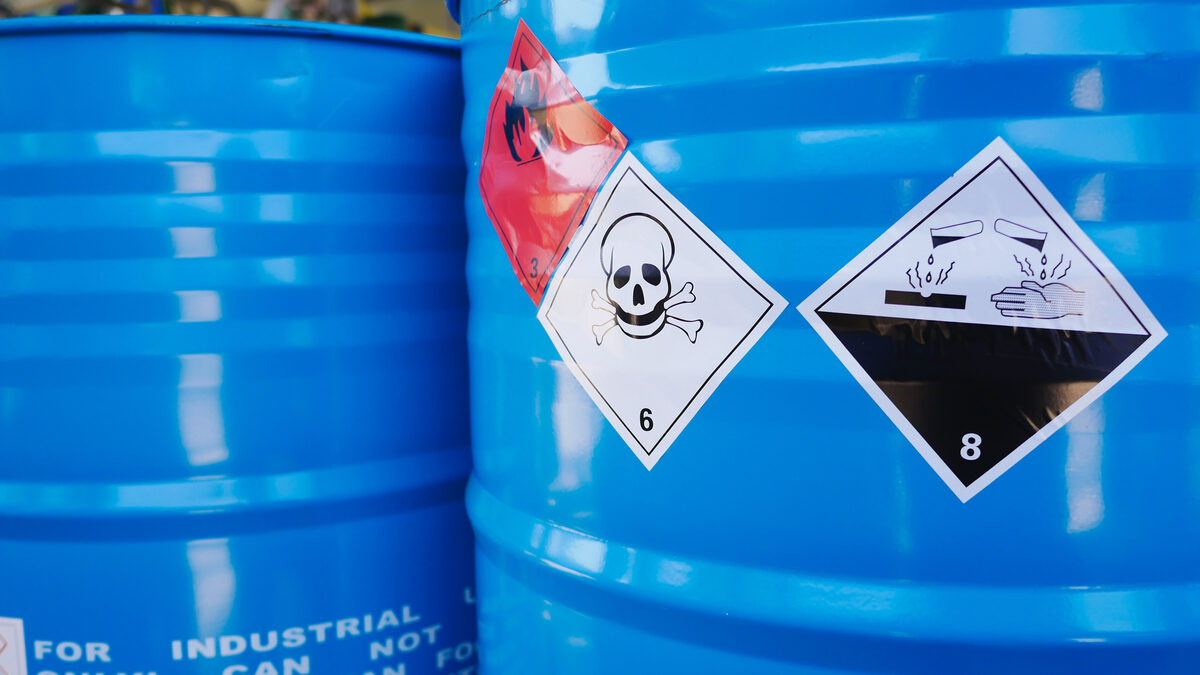
TSCA SNUR 26-2: The 90-Day Compliance Clock for Chemical Manufacturers
Federal Register batch 26-2 expands TSCA Significant New Use Rules. Chemical manufacturers and importers must file SNUNs 90 days before designated new uses. Penalties up to $50,120/day.
The Environmental Protection Agency published its 2026 batch of Significant New Use Rules (SNUR 26-2) on April 24 in the Federal Register. If your company manufactures, imports, or processes industrial chemicals—or runs R&D operations—this update likely affects you. Here’s what you need to know, and how to avoid a $50,000-per-day penalty.
What Is a SNUR, and Why Should You Care?
A Significant New Use Rule (SNUR) is EPA’s way of saying: “We approved your chemical when it was first introduced to market. But if you want to use it in a new way—a way we didn’t evaluate—you must tell us first and wait 90 days.”
The “new way” could be:
- A different industry application (e.g., using a solvent in lithium-ion batteries instead of coatings)
- A different volume threshold (moving from lab-scale to production scale)
- A different exposure pathway (closed-loop processing vs. spray application)
- A different worker population affected
SNURs are promulgated under TSCA Section 5(a)(2) and live in 40 CFR Part 721. The enforcement tool is mandatory notification—the Significant New Use Notice (SNUN)—filed at least 90 days before the new use begins.
The penalty for skipping this step: up to $50,120 per violation per day (per EPA enforcement guidelines, 40 CFR 19.4). A single day of unauthorized manufacturing of a SNUR-listed substance for a designated new use is a violation. Penalties compound daily.
SNUR 26-2: The April 2026 Batch
On April 24, 2026, EPA published SNUR batch 26-2 (88 FR 2026-08012). This batch extends protective measures from EPA Consent Orders covering four premanufacture notices (P-25-73, P-25-152, P-25-137, P-25-151) to any person intending to manufacture, process, use, distribute, or dispose of the affected chemical substances for a designated significant new use.
Key timeline:
- Comment period closes May 26, 2026
- Final rule anticipated June–July 2026
- Effective date typically 60 days after Federal Register publication
- First SNUN filings due 90 days after effective date (for any operation already conducting the new use)
The specific chemical identities may be confidential business information (CBI), but the regulatory text will identify the substance class and the designated new use(s). If you’re in chemical manufacturing, imports, R&D, or downstream processing, now is the time to access the TSCA Inventory and screen your substance list against 40 CFR 721 Subpart E.
Who Must Comply?
SNUR compliance applies to:
Manufacturers and importers. Under TSCA, “manufacture” includes import. If you bring a SNUR-listed chemical across the U.S. border to engage in a designated new use, you are subject to SNUN requirements.
Processors. Any company that receives the chemical and processes it for a designated significant new use must ensure a SNUN was filed upstream—or file one yourself before beginning.
R&D firms and contract manufacturers. If you’re scaling up a compound or testing new applications, SNUR status of your feedstock is your responsibility. Development work that matches a SNUR’s definition of “significant new use” requires pre-notification.
Downstream users. If the SNUR identifies a specific end-use as significant (e.g., “use in automotive coatings” or “use in textile manufacturing”), firms in those sectors must screen their supply chain and confirm SNUN compliance.
Which industries are affected? NAICS codes 3251–3259 (chemical manufacturing, including basic organic/inorganic, specialty, pharmaceutical, coatings, adhesives, and agricultural chemical sectors) are the primary targets. But SNURs extend downstream. If you’re in aerospace, automotive, electronics, textiles, or packaging, verify whether your suppliers’ feedstocks are SNUR-listed.
The 90-Day Compliance Process: Step by Step
1. Inventory Screening
Start now:
- Access the TSCA Chemical Substance Inventory on EPA.gov. Both public and confidential business information (CBI) versions are available.
- Cross-reference your manufacturing, processing, and R&D chemical inventories against 40 CFR 721 Subpart E (the SNUR listing section).
- Flag any substances with an “S” designation—this means a SNUR applies.
- Identify the specific significant new use(s) defined for each substance.
- Document which uses your company conducts or plans to conduct.
- If any of your intended uses match the SNUR definition, you are subject to notification.
2. Filing the SNUN
If you identify a match, you must submit a Significant New Use Notice (SNUN) at least 90 calendar days before beginning the designated new use.
SNUNs are filed using EPA’s standard e-PMN (Premanufacture Notice) form, submitted via the Central Data Exchange (CDX). The form and instructions are available on EPA’s New Chemicals Program website.
What to include in your SNUN submission:
- Cover letter citing the specific 40 CFR 721 section and identifying the designated significant new use(s) you intend to engage in
- Chemical identity (can be claimed as confidential business information)
- Manufacturing or processing method (batch, continuous, import source, etc.)
- Facility location and contact information
- Projected production volume and intended uses
- Exposure information (worker populations, consumers, environmental fate)
- Hazard data relevant to the new use—EPA may request additional testing or studies
Filing fees:
- Large business: $45,496 per SNUN
- Small business: $14,976 per SNUN (if certified under SBA criteria)
If two or more companies are subject to the same SNUR and same significant new use, you may file a joint SNUN to reduce duplicative filings.
3. EPA Review (90 Days)
EPA has 90 calendar days to review the SNUN. During this window:
- EPA may request additional data or toxicology studies
- EPA may issue a Notice of Intent to Regulate (NIR), signaling intent to restrict or ban the use
- EPA may issue a final no-objection letter, allowing the use to proceed
- You cannot manufacture or process the substance for the designated new use until the 90-day period closes or EPA issues written approval, whichever is earlier
Critical point: Interim manufacturing during the review period is prohibited unless EPA grants explicit written approval. A single day of unauthorized production is a violation.
4. Decision and Compliance
Once EPA issues its final determination:
- If approved (no-objection letter): you may begin manufacturing/processing the designated new use
- If restricted: EPA may impose conditions, require additional monitoring, or prohibit the use altogether
- If further regulated: EPA may issue a Risk Management Order or ban the substance outright
5. Recordkeeping and Downstream Notification
- Retain SNUN records (submission date, EPA review decision, any correspondence) for at least 5 years
- Notify downstream processors that the substance is SNUR-listed (per 40 CFR 721.72 hazard communication requirements)
- Update Safety Data Sheets (SDS) to identify the SNUR status and restrictions
- Document your intent to use the substance and all supporting information provided to EPA
What’s the Enforcement Picture?
EPA has significantly escalated TSCA enforcement in 2025–2026:
- 115 new administrative actions and $4.3 million in penalties assessed for TSCA violations since the current administration took office
- Largest single penalty in 2025: $700,000 for Chemical Data Reporting (CDR) rule violations
- Six-figure penalties in 2025 alone: $415,000, $393,000, $112,155 (all CDR), plus $100,000 for methylene chloride restrictions
- SNUR-specific penalties: up to $50,120 per violation per day
What does “per violation per day” mean? It means EPA can assess the maximum penalty for each day your company manufactures or imports a SNUR substance without a filed SNUN. A 30-day delay in filing = 30 violations at $50,120 each = $1.5 million.
NGOs have also begun filing TSCA citizen suit enforcement actions, increasing reputational and financial exposure for non-compliance.
Recent focus areas: EPA’s enforcement office is prioritizing import violations and chemical data reporting. If your company imports SNUR-listed chemicals, you’re on the audit radar.
State-Level Compliance: The Overlay You Cannot Ignore
Federal TSCA SNUR compliance does not exempt you from state chemical disclosure and restriction laws. You must satisfy both.
California: If you manufacture or distribute products containing chemicals subject to SNURs, screen the substance against California Proposition 65 (known to cause cancer or reproductive harm) and DTSC’s Safer Consumer Products program. California updated its Prop 65 list in December 2025; some SNUR substances may now have dual listing, triggering state warning label requirements, safer alternatives analysis, and product reformulation pressure.
Washington: Washington restricts chemicals of concern in children’s products. Screen SNUR substances against the Restricted Chemicals List for Children’s Products.
Massachusetts: The Toxics in Packaging law (TIP) requires disclosure of intentionally added chemicals above thresholds. No federal SNUR exemption exists.
New York: The Chemical Disclosure law requires manufacturers to report chemical constituents above threshold levels in products sold in New York. SNUR compliance does not exempt this requirement.
Practical implication: A substance may be SNUR-compliant at the federal level but still require state-level reformulation, labeling, or disclosure. Map your SNUR substances against state chemical lists early.
Your 2026 Compliance Checklist
- By May 26, 2026: Monitor the Federal Register for final publication of SNUR 26-2; review the specific substances and designated new uses
- Within 30 days of final rule: Conduct full inventory screening against the updated 40 CFR 721 listings
- Within 60 days: Identify any SNUR-listed substances your company manufactures, imports, processes, or plans to use
- If using a SNUR substance for a designated new use: File a SNUN immediately (minimum 90 days before production start)
- Concurrent filing: Submit small business certification if eligible (reduces fee from $45,496 to $14,976)
- During EPA review: Prepare for data requests; conduct any additional testing EPA deems necessary
- Upon EPA decision: Maintain records for 5+ years; update SDS and downstream notifications
- Ongoing: Cross-reference SNUR substances against state chemical disclosure and restriction laws
Why iSi Environmental?
Chemical manufacturers and R&D firms cannot afford to miss a SNUR deadline or misclassify a substance. The compliance window is tight—90 days from your SNUN filing to EPA decision—and the penalty for skipping notification is steep.
iSi Environmental helps manufacturers navigate TSCA compliance through:
- SNUR inventory screening: Rapid screening of your chemical substance list against current and pending SNURs; identification of risk exposure
- SNUN preparation and filing: Complete package preparation, technical data assembly, regulatory correspondence, and CDX submission
- Multi-jurisdictional compliance: Mapping SNUR substances against California Prop 65, DTSC SCP, and state chemical disclosure laws
- Compliance audits and training: Staff training on SNUR identification, documentation, and downstream notification; pre-audit review of your TSCA systems
If your company manufactures, imports, or processes chemicals—or operates an R&D pipeline for novel applications—contact iSi Environmental to discuss a SNUR compliance audit and your pathway to SNUN readiness.
Sources
- Federal Register. “Significant New Use Rules on Certain Chemical Substances (26-2).” 88 FR 2026-08012, April 24, 2026. https://www.federalregister.gov/documents/2026/04/24/2026-08012/significant-new-use-rules-on-certain-chemical-substances-26-2
- U.S. EPA. “Filing a Significant New Use Notice (SNUN) under TSCA.” https://www.epa.gov/reviewing-new-chemicals-under-toxic-substances-control-act-tsca/filing-significant-new-use-notice
- Electronic Code of Federal Regulations. “40 CFR Part 721 – Significant New Uses of Chemical Substances.” https://www.ecfr.gov/current/title-40/chapter-I/subchapter-R/part-721
- National Law Review. “Environmental Protection Agency Ramps Up TSCA Enforcement in 2025.” https://natlawreview.com/article/environmental-protection-agency-ramps-up-tsca-enforcement-2025
- U.S. EPA. “Recent Activities for the New Chemicals Program under TSCA.” https://www.epa.gov/reviewing-new-chemicals-under-toxic-substances-control-act-tsca/recent-activities-new-chemicals
- Federal Register. “Civil Monetary Penalty Inflation Adjustment.” 90 FR 2025-00206, January 8, 2025. https://www.federalregister.gov/documents/2025/01/08/2025-00206/civil-monetary-penalty-inflation-adjustment
- California Department of Toxic Substances Control. “Proposition 65 List.” https://oehha.ca.gov/proposition-65/proposition-65-list
- BD Law. “What to Expect Under TSCA in 2026.” https://www.bdlaw.com/publications/what-to-expect-under-tsca-in-2026/