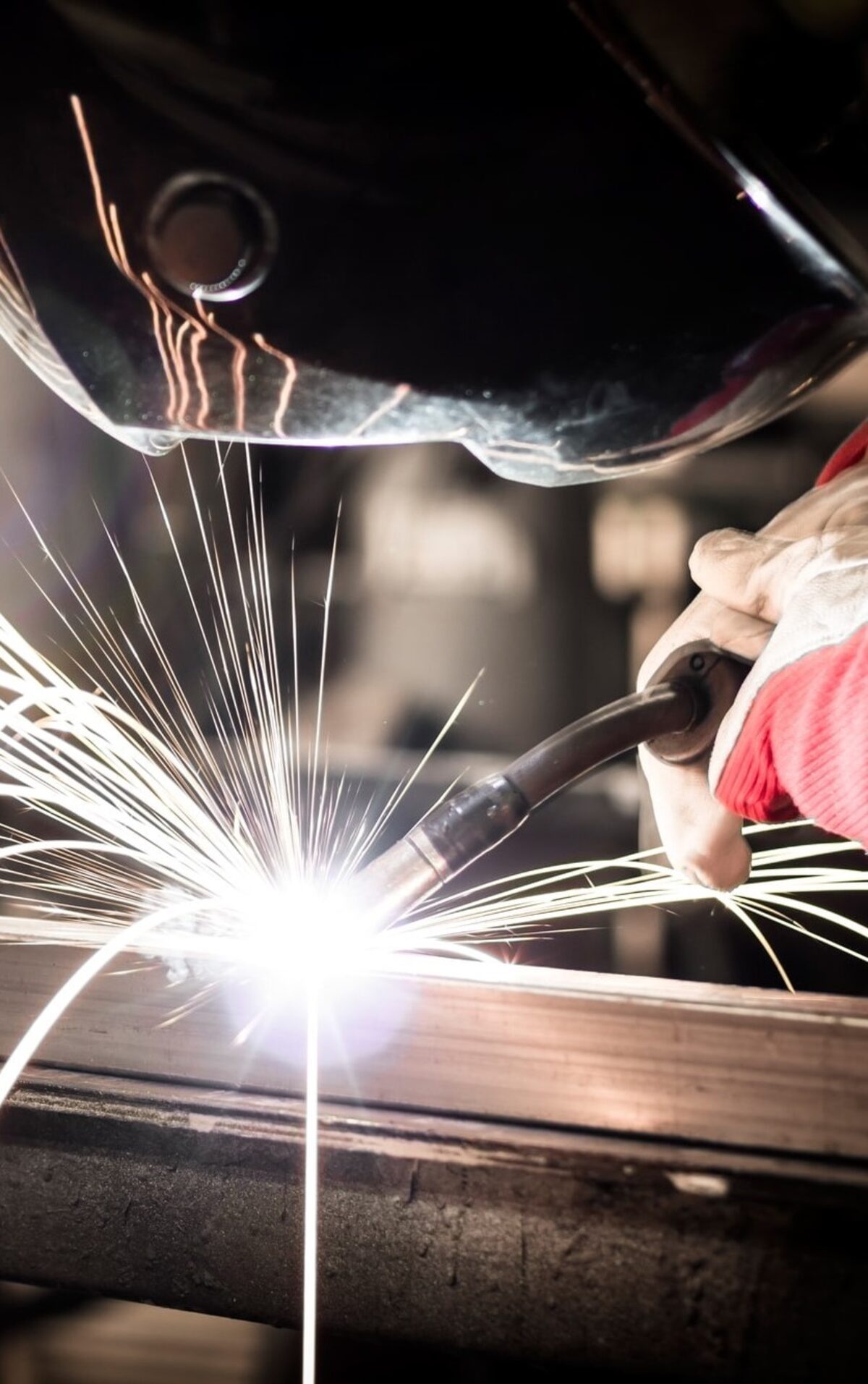
Welding Fumes
Welding fumes carry manganese, hexavalent chromium, and other toxic metals. OSHA's exposure limits, monitoring, and controls — explained by iSi.
When you see the visible smoke coming from the welding process, whether it’s from welding, oxy fuel cutting, plasma cutting or brazing, that smoke is a welding fume. Welding fumes contain very fine particles of metal and gas by-products that can negatively affect your health if you are not protected with proper PPE and ventilation.
⚡ TL;DR — Welding fumes carry cadmium, manganese, beryllium, and chromium. Without local exhaust ventilation and proper respiratory protection, welders face asthma, kidney disease, and neurological damage. Engineering controls beat PPE every time.
Fumes come from the base material or filler, paints and coatings on the metal and covering the electrode, shielding gases, arc ultraviolet light and heat reactions, process and consumables, and vapors from cleaners and degreasers.
⚠️ The Problem — Welders and helpers develop “welder’s asthma” because employers skip proper ventilation and respiratory protection. Manganese exposure quietly builds up over years, causing Parkinson’s-like symptoms. Many facilities assume masks are enough and skip the engineering controls that actually work.
Welding fumes can contain exposure to a number of heavy metals as well as gases such as argon, helium, carbon dioxide, carbon monoxide, nitrogen, phosgene, and hydrogen fluoride. Each metal and gas will have different effects on the body and some materials such as cadmium, nickel, beryllium, chromium, manganese and arsenic can be especially harmful and cause their own symptoms.
Key Control Strategies
Because each material you’re welding with can have different effects, it’s very important to know the hazards of the materials you’re working with. Know what the hazards of the specific metals and the gases you are using. Each welding power source and container of consumable product should have a warning labels with specific safety instructions. Consult SDSs of the materials and consumables you are working with.
Breathing in welding fumes can cause nose and throat irritation, nausea and dizziness and in cases of prolonged exposures, can cause asthma as well as eye, kidney, stomach, nervous system, and other issues. If you experience any of these, leave the area immediately to fresh air.
Never weld in confined spaces as confined spaces can trap the gases and displace the air causing you to suffocate. Any confined space welding requires additional ventilation.
Local exhaust ventilation is more effective for reducing fumes but if that is not available, general ventilation methods such as roof vents, open doors and windows, roof fans, and floor fans can move air throughout the area. Watch where these air sources are directing the chemicals as to not overexpose other workers and bystanders.
If there is not proper ventilation available, respirators may need to be worn.
Most welding shops that get inspections find gaps in their fume control strategy. You’ll need a written respiratory protection program, baseline medical exams for exposed workers, and engineering controls documented before an OSHA inspector shows up. We help facilities close these gaps before they become violations.
Ensure the surface that you are welding is cleaned of any coatings like paints or solvents that may give off toxic materials.
Position yourself so that you avoid breathing in the fumes. Stay upwind in open and outdoor environments or if indoors, use forced or natural air movement to reduce the fume. Make sure that any local exhaust ventilation systems are properly running so they can be used to remove fumes and gases from the breathing zone.
Keep fume hoods, fume extractor guns and vacuum nozzles close to plume sources. Portable and flexible exhaust systems can be positioned so that fumes are drawn away.
If there’s a lower fume-generating material that can be used in welding, consider using it.
It’s important for your employer to know the exposures of welders, welder helpers, fire watchers, and workers adjacent to welding operations, so they may conduct industrial hygiene sampling to determine exposures and if there are procedures that must be developed to keep them at acceptable levels.
💰 Typical cost for a compliant welding respiratory protection program: $2,500–$5,000 for initial sampling, control assessment, and procedure development. One OSHA citation for inadequate ventilation runs $10,000–$20,000.
Frequently Asked Questions
Q: What are welding fumes and what metals do they contain?
Welding fumes are fine particles and gases produced during welding, plasma cutting, oxy-fuel cutting, and brazing. Fumes can contain heavy metals including cadmium, nickel, beryllium, chromium, and manganese, as well as gases such as carbon monoxide, nitrogen, phosgene, and hydrogen fluoride. Each metal produces different health effects, with some such as beryllium and cadmium requiring OSHA medical monitoring.
Q: What are the health effects of welding fume exposure?
Short-term exposure causes nose and throat irritation, nausea, and dizziness. Prolonged exposure can cause welders’ asthma, eye damage, kidney disease, stomach issues, and nervous system damage. Symptoms vary by metal exposure; cadmium exposure carries risk of kidney damage and lung cancer, while manganese exposure may cause neurological effects.
Q: What controls should be used to protect welders from fumes?
The most effective control is local exhaust ventilation positioned at the fume source to capture gases before inhalation. General ventilation through open doors, windows, roof fans, and floor fans provides secondary control. If ventilation is insufficient, respiratory protection may be required. Never weld in confined spaces without additional ventilation due to gas displacement and oxygen depletion hazards.
Q: What preparation is necessary before welding to reduce fume exposure?
Clean all welded surfaces of paints, coatings, and solvents that may release additional toxic materials when heated. Review Safety Data Sheets for all consumables and base materials to understand hazard profiles. Position yourself upwind (outdoors) or use forced air movement (indoors) to stay outside the fume plume. Use lower-fume-generating materials when possible.
Need help building a welding fume control program? Contact iSi Environmental for a same-day response, or explore our respiratory protection services to see how we can help your facility.
We Plug In. You Level Up.