What OSHA Says About Using Online Safety Training Courses
News to your inbox! We cover OSHA, EPA and DOT regulations news & best practices each week. Subscribe to our blog today!
Online and computer-based training can be a powerful tool for your training program, especially in places where there is high turnover, multiple shifts, or high numbers of employees. However, OSHA’s official guidance puts clear limits on what online training alone can accomplish.
⚡ In short: OSHA says online training cannot by itself meet compliance requirements unless it includes hands-on interactive elements. Students must operate actual equipment, practice PPE donning/doffing, and ask questions of qualified instructors in real-time. The classroom/theory portion can be online, but practical skills require in-person instruction.
Recently, an OSHA interpretation letter clarified the question many facilities ask: Are online training programs acceptable for compliance with OSHA’s worker training requirements?
⚠️ Why this matters: Facilities that shift entirely to online delivery for hands-on topics like forklift operation or PPE use end up with documented non-compliance once OSHA audits records. If an incident occurs at a facility using online-only training for skills requiring hands-on mastery, OSHA typically escalates to willful citations. Insurance may also deny coverage if the training methodology doesn’t match the standard’s intent.
The answer is yes — but with important conditions that many online platforms don’t meet.
OSHA’s Opinion of Online Safety Training
The response from OSHA said that although online safety training can be a valuable part of your training program, you cannot use it by itself to meet OSHA requirements unless it contains hands-on interactive elements.
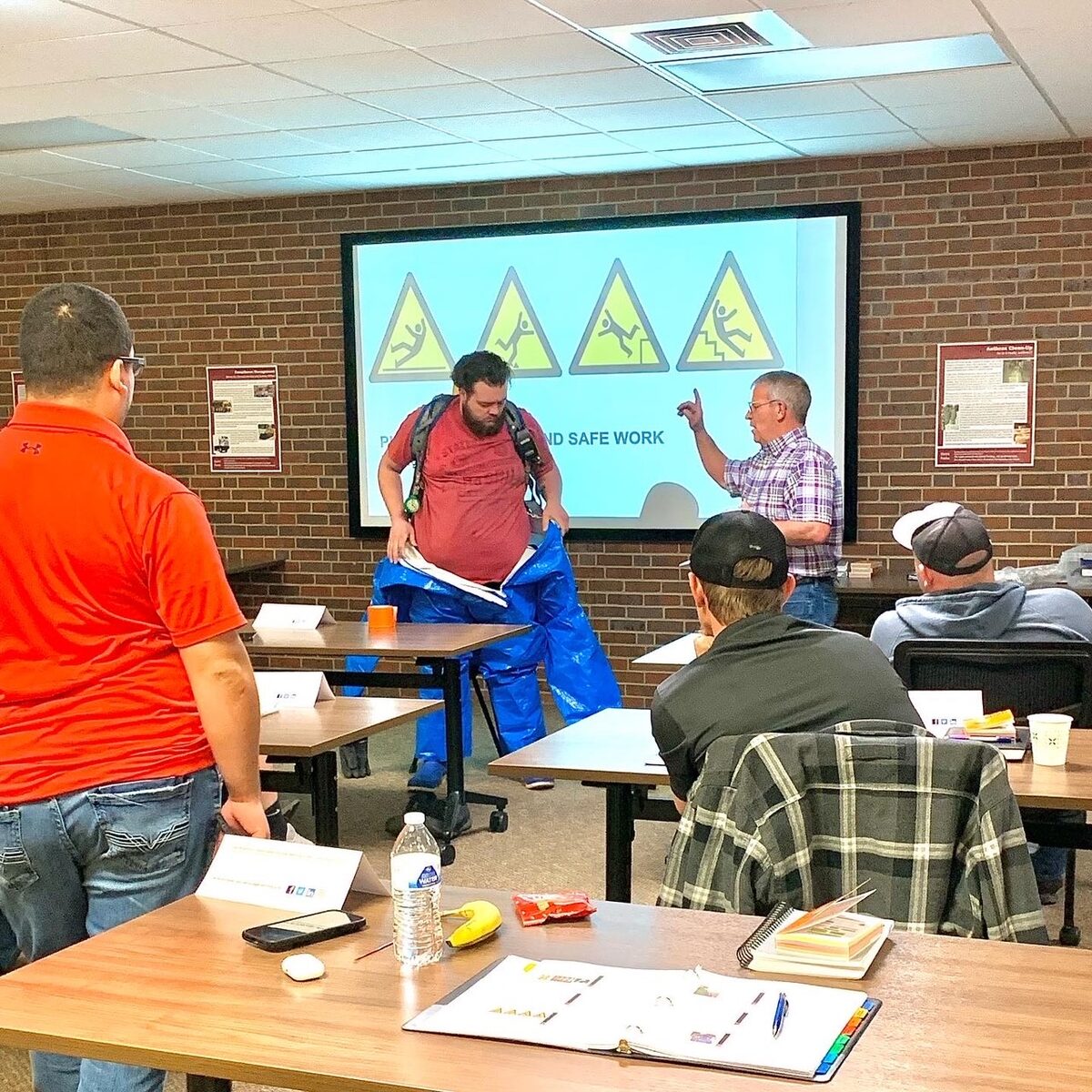
OSHA says that training requires a mastery of the material that would include safe uses of tools and equipment. The students must be able to interact with the proper equipment and tools. This benefits not only the new student, but is a good refresher for those who are more skilled and also allows a qualified instructor to make sure the student has mastered the skill.
The interpretation letter references a previous letter published in 1994 that mentions HAZWOPER (Hazardous Waste Operations and Emergency Response) as an example. In HAZWOPER, hands-on use of personal protective equipment is very important. Training should include how to don and doff the PPE and include a way to ensure the student is comfortable doing so and is doing it correctly.
The information also needs to be able to somewhat be tailored to the student’s situation. OSHA adds that this hands-on training needs to be conducted in a non-hazardous location as well.
This would also be the case for any powered industrial vehicle training. In each of those courses, there is a classroom portion about the hazards that could be done online. However, specific hands-on training with the actual equipment, whether that be a forklift, a scissor lift, a tug that pulls an airplane, etc., needs to be conducted in a hands-on fashion with the student operating the equipment and an instructor evaluating his/her performance and providing guidance.
Ability to Ask Questions
Another requirement to be meet OSHA standards is the student must be able to ask questions of an instructor. Some of the topics may be unfamiliar, and OSHA values the student’s ability to ask questions and receive them in a timely manner. They say that not having this interaction impedes the student’s ability to comprehend the material and retain it.
OSHA suggests that to take care of this requirement, a way to ask questions should be built into the program. They mention a hotline number could be used, but you may also be able to use email or chat. Regardless of what you use, the contact needs to go directly to a qualified trainer and the responses need to come back in a timely fashion.
Where to Find These Interpretations
To review these OSHA interpretation letters regarding online safety training, read the one from 2019 here, and the one from 1994 here.
Are you using online safety training for your company and now need to rethink how you’re administering it based on OSHA’s guidance? Let iSi help you! Contact us today for guidance, hands-on assistance, or customized online training modules that can be imported into your company’s learning management system.
Do you need assistance in administering your safety training programs? Let us help – contact us today!
Frequently Asked Questions
Q: Can OSHA training be completed entirely online?
No, according to OSHA interpretation letters, online training cannot by itself meet OSHA requirements unless it includes hands-on interactive elements. OSHA requires training to demonstrate mastery of material including safe use of actual tools and equipment. Students must interact with proper equipment, PPE, and tools under qualified instructor supervision to ensure competency and safe use.
Q: What hands-on training elements are required for OSHA compliance?
OSHA mandates hands-on training for tasks requiring equipment operation and PPE use. For powered industrial vehicles (forklifts, scissor lifts), students must operate actual equipment with instructor evaluation. For HAZWOPER and PPE training, students must practice donning (putting on) and doffing (removing) protective equipment and demonstrate correct application. Hands-on training must occur in non-hazardous locations.
Q: Can online training be combined with in-person training for OSHA compliance?
Yes, online training can be a valuable part of a comprehensive program when combined with hands-on instruction. The classroom portion (hazard awareness, regulatory background, theory) can be delivered online, but practical skill application and equipment operation must occur in person with qualified instructor supervision, observation, and evaluation.
Q: What capability must online training platforms have for student interaction?
OSHA requires that students be able to ask questions of a qualified trainer and receive timely responses. Training platforms must include communication mechanisms such as hotlines, email, chat, or other direct contact to instructors. Timely feedback and instructor interaction are critical for student comprehension and retention of material.
💰 What improper online training costs: A facility citing “online forklift training” during an OSHA inspection for an incident faces willful citations for inadequate training methodology, potentially $165,000+ per violation. Even absent an incident, audits of training records often reveal gaps between what the standard requires (hands-on demonstration) and what was delivered (online course). Insurance carriers frequently exclude coverage for incidents involving workers trained by non-compliant methods.
Need a blended training solution or curriculum audit? Run the 60-second Compliance Gap check or get a scoped proposal from our team.
We Plug In. You Level Up. Talk to an iSi training specialist →