
Bloodborne Pathogens in an Industrial Plant: What 29 CFR 1910.1030 Requires
Nearly half of OSHA's FY2025 bloodborne pathogens inspections were outside health care. Here is what 29 CFR 1910.1030 asks of a plant with a first aid team.
Industry news, compliance guidance, and best practices from iSi Environmental's expert team
Nearly half of OSHA's FY2025 bloodborne pathogens inspections were outside health care. Here is what 29 CFR 1910.1030 asks of a plant with a first aid team.
OSHA sets benzene at a 1 ppm PEL and a 0.5 ppm action level in 29 CFR 1910.1028, then excludes oil and gas drilling, production and servicing outright.
Part 279 has no generator size tiers and has not moved since 2016. What the used oil storage, labeling and halogen rules require in Kansas and Missouri.
OSHA's cadmium PEL is 5 µg/m³ and the action level is 2.5 µg/m³ under 29 CFR 1910.1027. A result of 3 µg/m³ is lawful and still starts surveillance.
Subpart T has not changed since 2007 while TSCA deadlines on the same three solvents kept moving. What the solvent cleaning NESHAP requires of a degreaser.

Subpart MMMM is the major-source metal parts coating NESHAP at 40 CFR 63.3880 to 63.3981. Run the two applicability gates and the five subcategory limits.
OSHA's general industry lead standard removes a worker at 60 micrograms per 100 grams of whole blood. The construction standard removes at 50. What 1910.1025 actually requires.

What 40 CFR 70.6(c)(5)(iii) requires a Title V compliance certification to contain, who signs it, and why that signature carries criminal exposure.
The 2028 CDR window opens June 1, 2028, but 40 CFR 711.8 tests every production year back to January 2024. What Part 711 requires and who has to file.
Subpart JJJJJJ exempts most gas-fired boilers, but the exemption depends on a 48-hour fuel log. What the rule requires, and the 25 and 61 month tune-up clocks.
Most OSHA permissible exposure limits date to 1971. What the Z tables in 1910.1000 require, the additive formula for mixtures, and where sampling duty starts.
EPA's October 2026 proposal would cut low-production well sites to quarterly AVO. What leak monitoring marginal well sites owe today, and what did not change.
Where dry cleaning was done on site, SBA requires a Phase I followed by a Phase II no matter what the Phase I concluded. The rule and the state fund money.

A Phase 1 ESA is a non-invasive investigation under ASTM E1527-21 that identifies environmental conditions before a property deal. What it covers, costs, and contains.
Formaldehyde at 0.6 ppm is under the 0.75 ppm PEL and still over the action level, which starts 6-month monitoring and medical surveillance under 1910.1048.
A 2,000-gallon propylene tank holds 8,600 lb, under the 10,000 lb PSM threshold. Two general duty clauses and 29 CFR 1910.110 reached that site anyway.
A fire does not exempt a burned building from the asbestos NESHAP. What applies when a fire damaged structure is demolished, who files, and what six states add.
A Kansas quarry carries five environmental permits from three divisions in two departments, and three are not KDHE's. The map, and the October 31 clock.
No federal rule requires an asbestos operations and maintenance program for a commercial building. Two sourced tables split the required duties from the rest.
Half the contractor requirements in a manufacturing plant RFP carry a CFR section. The other half are the owner's choice, and they narrow the bidder field.

A manufacturing plant does not owe one list of dates. It owes four, on four different clocks. Here is every recurring federal obligation with its CFR citation.

Your EHS manager left. Almost nothing lapses legally, because the duties bind the employer. Here is what does lapse, with the cited 30, 60 and 90 day fix.
40 CFR 262.15(a) ties satellite accumulation to the process operator. What that means for in-plant waste handling in a manufacturing plant, and who may move it.
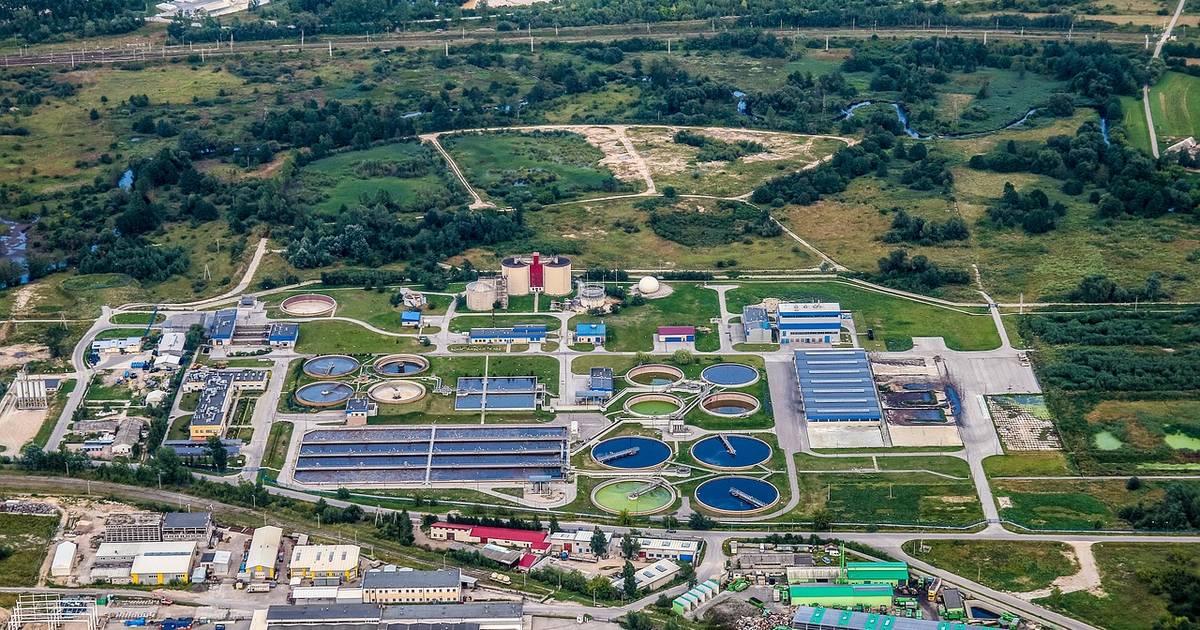
Federal metal finishing cadmium sits at 0.69 mg/L. A Kansas City metro city sets 0.020 mg/L for the same metal. What your pretreatment permit requires.